

Key facts
- Continuity is the hard part, not the prescription. The diagnosis does not travel with you, and the new clinic starts from nothing.
- Stopping abruptly is the real hazard. Discontinuation symptoms are common, and one systematic review found most clinical guidelines advise tapering gradually while giving doctors almost no detail on how (PMC).
- Discontinuation is not addiction. Antidepressants are not addictive in that sense, and saying so matters, because the fear of it is why some people stop badly in the first place.
- Withdrawal is routinely mistaken for relapse, by patients and sometimes by doctors, and the two need opposite responses.
- How a medicine leaves the body shapes the risk. Some clear slowly and forgive a missed day. Others do not.
- Carry the active ingredient, not the brand. The box changes name at the border; the molecule does not.
- Nothing here is a plan to act on alone. Every route in this article ends with a clinician.
If you are in crisis right now, this article is not the thing you need. In Singapore, national mindline 1771 is available round the clock, the Samaritans of Singapore helpline is 1767, and the Institute of Mental Health helpline is 6389 2222. In an emergency, or if someone is in immediate danger, call 995. Our guide to mental health in Singapore has more.
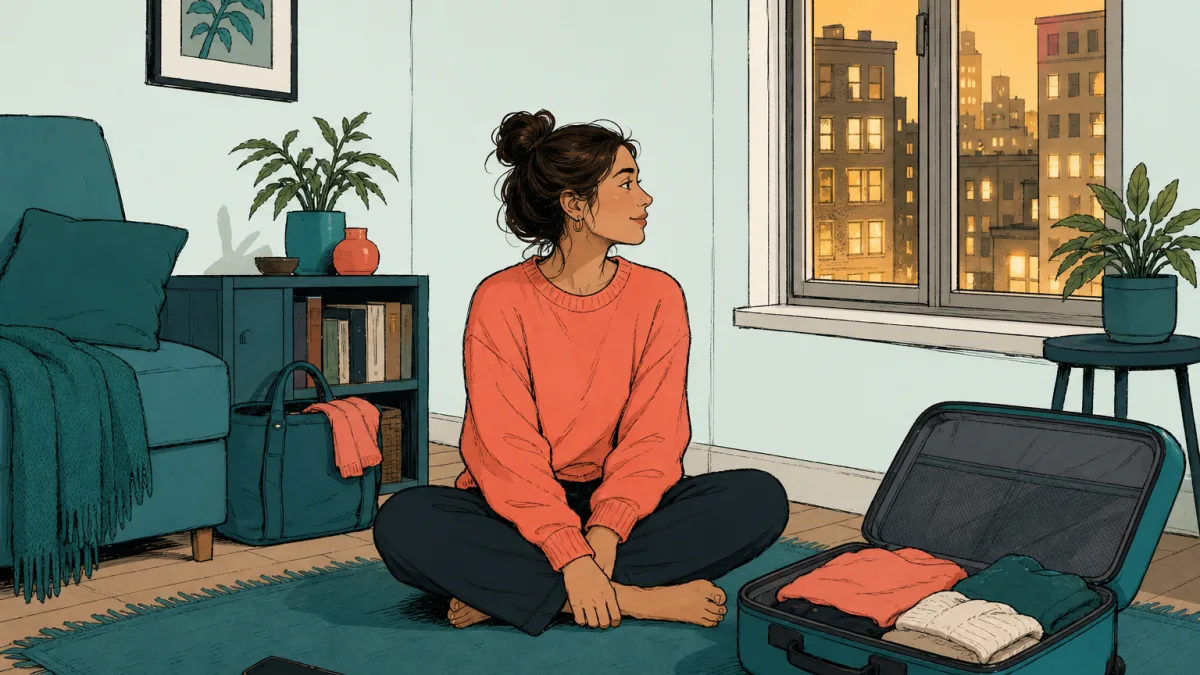
It is a Sunday evening and you are looking at what is left in the strip. Three weeks, give or take. You have known for a while that this was coming and you have not done anything about it, because the clinic here does not have your history, because you are not sure who you would even ask, and because the effort involved in explaining nine years of your life to a stranger in a second language is exactly the sort of effort that this condition is best at making feel impossible.
That is the problem with continuity of care for antidepressants. The moment you have to organise it is frequently the moment you are least equipped to. Feeling well for years on treatment may mean it is working; whether to continue is a planned discussion, not a reason to let supply lapse.
Why does the prescription gap happen?
A new clinic needs your treatment history before it can take over. People preparing to move build careful lists. Shipping, schools, tax residency, the dog. Almost nobody writes down “arrange ongoing psychiatric care”, partly because it does not feel like a logistics problem.
Back home it had stopped being one. The prescription renewed quietly, a repeat here, a check-in there, and years passed in which the medicine simply arrived. That is what good continuity looks like, and it is invisible until it stops.
What replaces it is a clinic that has never met you, no records, and a request that sounds, from the other side of the desk, like someone asking for a specific medicine by name. A new doctor who has no history is being asked to take responsibility for a treatment they cannot verify. Their caution is not obstruction. Antidepressants are not usually the class behind a drug-seeking concern, but a new doctor still needs the history to prescribe responsibly.
Bring the diagnosis, medicine history and recent treatment record to the first appointment. That gives the new doctor something to assess beyond a brand name.
Could withdrawal look like relapse?
They can look alike; new physical sensations after a stop are one clue to discuss with a clinician.
The danger in running out is not that you feel worse. It is that you feel strange, conclude the illness has come back, and draw exactly the wrong lesson from it.
Discontinuation symptoms are common and well described. The Cleveland Clinic Journal of Medicine sets out the typical picture: insomnia, flu-like symptoms, mood disturbance, dizziness, and the odd electrical sensations people describe as brain zaps, with a broad range of other effects possible. They can begin within days of stopping and last from days to considerably longer.
Now notice how that reads to somebody experiencing it. Low mood, poor sleep, anxiety, feeling physically wrong. It looks exactly like the thing the medicine was for.
So people conclude that the depression came back the moment they stopped, which they then interpret as proof they can never stop, or as proof the medicine was holding them together all along, or, most damagingly, as proof they are dependent on it. Three wrong conclusions from one avoidable event.
The Cleveland Clinic Journal of Medicine review says discontinuation can bring symptoms you never had in the original illness, or familiar symptoms at a greater intensity. Dizziness and electric-shock sensations can accompany it. Recurrence can bring back the familiar pattern. These overlap enough that the date of the last tablet and the symptom timeline belong in a clinical conversation, not a guess at home.
And to be direct about the fear underneath all this: antidepressants are not addictive in the way that word is normally used. There is no craving, no escalating need, no compulsion. What there is, is a nervous system that adapted to their presence and needs a reasonable amount of notice to adapt back. Those are different things, and conflating them has caused a great deal of unnecessary shame.
Why do missed tablets affect people differently?
The medicine’s time in the body changes the risk of discontinuation symptoms. You do not need numbers for this, only the shape.
Medicines that leave the body slowly create their own gentle taper. Ones that leave quickly do not, and a forgotten day or an empty packet produces a much sharper drop.
| Roughly how it behaves | Medicines on this site | What that means in practice |
|---|---|---|
| Clears slowly, self-tapering | fluoxetine | A missed day is usually uneventful, and stopping is generally less turbulent |
| Middle ground | sertraline, escitalopram, citalopram, mirtazapine, vortioxetine | Missed days are noticeable for some people and not others |
| Clears quickly, least forgiving | paroxetine, venlafaxine, duloxetine | Gaps are felt soonest and most sharply, so supply planning matters most here |
Bupropion, amitriptyline and trazodone do not fit neatly into that table. Tell a new doctor why amitriptyline was prescribed if it was for something other than depression. Browse antidepressants, major depressive disorder or generalised anxiety disorder for the relevant condition.
What should I carry to a new doctor?
Bring the ingredient name, a treatment summary and time to arrange the next appointment. The practical part, and it is short.
The active ingredient, written down. A genuine generic should match its ingredient, strength and form; mention any difference you notice after a manufacturer change. Not the brand. Brands change between countries and the same box can be called three different things across the region; our medicine brand-name decoder exists for this. A doctor who is given an ingredient can work; a doctor given an unfamiliar brand has to start by researching what you are even taking.
A written summary from the doctor who knows you. What the diagnosis is, what has been tried, what did not work and why, how long you have been stable. This single document does more than anything else to turn a difficult first appointment into an ordinary one. It is much easier to obtain before you leave than after.
Enough overlap to be unhurried. The goal is to arrive with room to find someone properly rather than to find someone urgently.
A realistic view of what your new country’s system is like. Ours differ enormously in how mental health care is organised and reached. The country guides cover the practicalities: Singapore, Thailand, Malaysia, Hong Kong and the Philippines.
What if I have already run out?
Contact a clinician promptly and bring the old pack or a photograph. Sometimes the planning did not happen, and the article that lectures you about it is not useful.
Tell someone quickly rather than waiting to see how it goes. A general practitioner is a legitimate and often faster first stop than a specialist, and in Singapore national mindline 1771 can help you find the right service as well as offering support. Take the empty packet with you, or a photograph of it, because the ingredient name is printed on it.
What not to do is halve what remains to stretch it out. It feels prudent and it produces an unplanned, uneven taper of exactly the sort that causes trouble, while also leaving you with less treatment than you need.
What else should I read?
Match the next step to the country and the care you need. For getting care rather than medicine, see mental health in Singapore. For sleep problems that often travel alongside all of this, see sleep, jet lag and insomnia in Thailand. For matching a familiar brand to what is sold here, see buying generic medicines in Asia.
Do and don’t
Do:
- Ask the current doctor for a written history before the move.
- Give the new clinic the ingredient name, previous treatments and the reason for each change.
- Contact a clinician promptly if the supply has already run out.
Don’t:
- Stretch the strip by taking tablets irregularly or halving them on your own.
- Assume dizziness, brain zaps or low mood after stopping must be a relapse.
- Change or stop treatment without a clinician’s plan.
Sources
- Cleveland Clinic Journal of Medicine, discontinuing antidepressants: pearls and pitfalls
- Clinical practice guideline recommendations on tapering and discontinuing antidepressants, systematic review
- HealthHub Singapore, MindSG: seeking support
This article is general information, checked on 10 August 2026. It contains no doses and no tapering schedules, and it is not a substitute for care from a clinician who knows your history.