

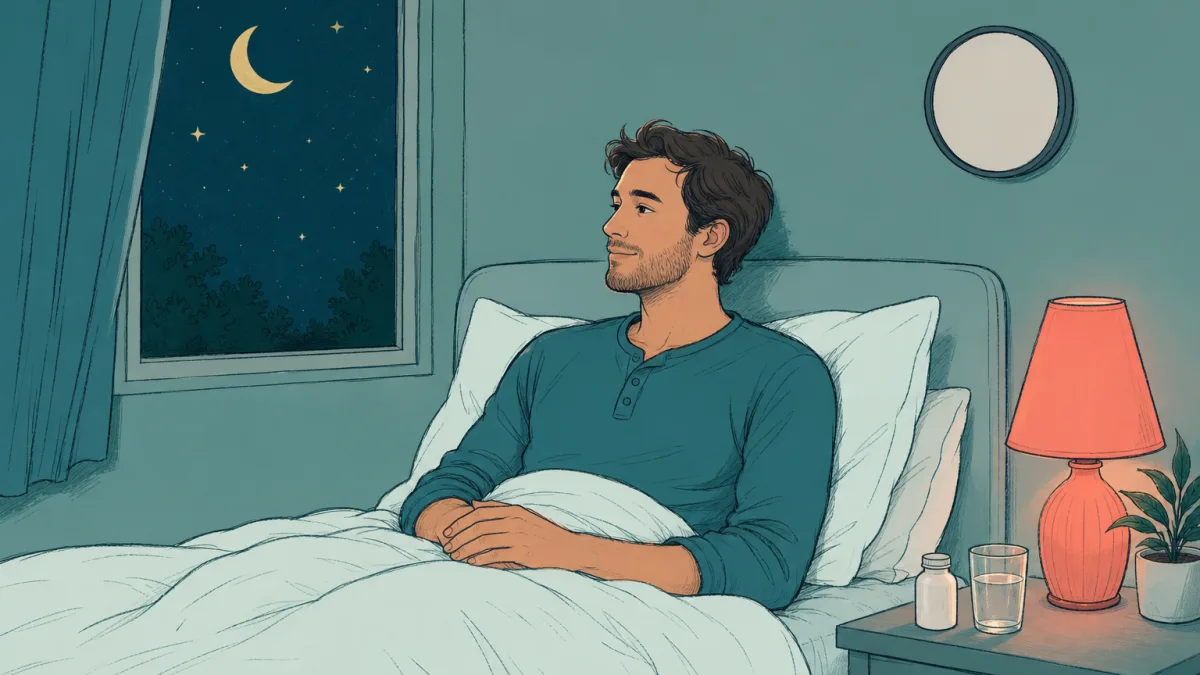
A flight from Europe or the Americas to Thailand crosses more than three time zones, the point at which the CDC expects jet lag: a temporary sleep problem caused by the mismatch between your normal daily rhythms and a new time zone. It affects mood and concentration as well as physical performance, so the first days after landing tend to bring tiredness, broken nights and irritability. Heat and an irregular work pattern keep some people’s sleep unsettled long after the flight, and plain insomnia is a separate problem with its own rules. This guide covers the first few days after a long flight, sleeping through a hot Thai night, the NHS position on melatonin for jet lag, and the point at which poor sleep needs a doctor.
Key facts
- Light is the strongest lever. Change your sleep schedule to the new time zone as quickly as possible, go outside during the day so natural light can shift your body clock, and set an alarm to stop yourself oversleeping in the morning. That is the NHS jet lag advice, and daylight is what does the work.
- Jet lag eases on its own. The NHS says it usually improves within a few days as your body adjusts to the new time zone. The CDC puts jet lag at travel across more than three time zones, so a haul from Europe or the Americas can take several days to settle.
- Good sleep habits come first. The NHS insomnia guidance is a fixed wake time every day, at least an hour to relax before bed, a dark, quiet bedroom, and no alcohol, tea or coffee for at least 6 hours before sleep.
- Melatonin is prescription-only in the UK and is not an NHS treatment for jet lag. The NHS jet lag page says melatonin tablets are not recommended on the NHS for jet lag because there is not enough evidence to show they work. The NHS melatonin pages call it a short-term treatment for jet lag in adults, with some evidence that it makes symptoms less severe. In the UK it is a prescription-only medicine, so anyone considering it should ask a doctor.
- Z-drugs are prescription-only and short-term. Zopiclone and zolpidem can help briefly, but the NHS says sleeping pills are only prescribed for a few days or weeks at the most, when insomnia is very bad or other treatments have not worked, because they can have serious side effects and you can become dependent on them.
- Persistent insomnia needs a doctor. See a GP if changing your sleeping habits has not helped, if you have had trouble sleeping for months, or if the insomnia is affecting your daily life in a way that makes it hard to cope.
- Continuity matters for a prescribed sleep aid. In the UK the prescription names the molecule rather than the brand, and Thai pharmacies often stock that molecule under a different name, so know the active ingredient you are looking for.
Why is my sleep off in a new time zone?
Jet lag is the mismatch between your internal body clock and the local time where you have landed, and it eases as your body adjusts. The NHS lists what that feels like: difficulty sleeping at bedtime and waking up in the morning, tiredness, difficulty staying awake during the day, poor sleep quality, and problems with concentration and memory. Indigestion, nausea, constipation, changes in appetite and mild anxiety can come with it. Light sets a rhythm that runs to roughly 24 hours, and that rhythm does not move with the plane.
Thailand sits many hours ahead of Europe and the Americas, so the gap is large, and the direction of travel matters. Flying east, which is how most people reach Thailand from the West, tends to be harder than flying west, because you are asking your body to go to sleep earlier than it wants to. The CDC advises switching to your destination’s sleep and waking routine on arrival once the time change is more than three hours.
How do I reset faster after a long flight?
Get outside into daylight at the right times, shift onto local time straight away, and be patient for the first few days. Light is the single most powerful tool, because light is what sets your body clock. Get outside into daylight at the right times in your new location and your rhythm shifts toward local time. Thailand makes this easy, with bright mornings most of the year. Alongside light, a few simple moves from the NHS make the first days easier:
- Shift onto local time straight away. Eat, sleep and wake by the clock in Thailand, not the one you left behind.
- Get daylight during the day, especially in the morning, and keep evenings dimmer.
- Stay well hydrated, and go easy on caffeine and alcohol, both of which disturb sleep.
- Nap only briefly if you must, so an afternoon doze does not wreck the coming night.
- Be patient with yourself for the first few days, when tiredness and focus are at their worst.
These sound modest, but combined they do most of the work. For the night-to-night basics that help in any setting, the NHS guide to how to get to sleep is a good reference: a consistent bedtime and wake time, a wind-down routine, a cool dark room, and screens put away before bed.
How do I sleep well in Thailand’s heat?
Keep the bedroom cool, dark and ventilated, and stop caffeine, tea and coffee at least 6 hours before bed. A room that is too hot or cold is on the NHS list of common causes of insomnia, and a Thai hot season supplies heat and humidity together. Air conditioning or a fan, light bedding and a cool shower before bed bring the room closer to a sleeping temperature. The same guidance asks for a dark, quiet bedroom, using curtains, blinds, an eye mask or ear plugs if light and noise get through, and no exercise within 4 hours of bed.
Does melatonin help with jet lag?
Melatonin is a prescription-only medicine in the UK, and the NHS does not recommend it for jet lag on the NHS because there is not enough evidence that it works. Ask a doctor before considering it. Melatonin is the hormone your body releases as it gets dark, the signal that it is time to wind down, which is why it comes up constantly in conversations about jet lag. The NHS medicines pages are more positive than the jet lag page: they say melatonin can be taken as a short-term treatment for jet lag in adults, that there is some evidence it makes symptoms less severe, and that it can shorten recovery after a long flight by a day to a day and a half. They also note that it may not be available on NHS prescription, and that timing it to your destination’s night is what makes it work, which is also what makes it easy to get wrong. If you are considering it, ask a clinician or pharmacist whether it suits you rather than treating it as a routine travel item. The NHS pages on common questions and how and when to take melatonin lay out the detail.
Melatonin sold in a health food shop or online is not authorised for sale in the UK, where it is a prescription-only medicine, and the NHS does not recommend ordering it online. The jet lag page keeps the emphasis on changing your sleep schedule to the new time zone as quickly as possible, getting outside during the day, and not sleeping during the day.
How do I sleep on shift work or irregular hours?
Set regular times for going to bed and waking up, keep a wind-down before sleep, and get daylight early in your own day. Remote workers and digital nomads in Thailand often run on a faraway office’s clock: calls that land at midnight local time, a working day that drifts later through the week, a sleep window that never quite settles.
Sleeping through a Thai morning means blacking out the room. The NHS insomnia advice is curtains, blinds, an eye mask or ear plugs, a comfortable mattress and pillows, and getting up at the same time every day, which on a night rota means the same time after every shift. The same NHS page lists jet lag and shift work side by side as causes of insomnia; jet lag clears within a few days as the body adjusts, while a night rota keeps pulling the clock the wrong way for as long as it runs. If daytime focus is the problem rather than sleep, our guide to staying sharp as a digital nomad in Asia covers that side.
When does poor sleep become insomnia, and when should I see a doctor?
The NHS defines insomnia as regularly having problems sleeping, and says it usually gets better by changing your sleeping habits. See a GP if those changes have not helped, if you have had trouble sleeping for months, or if it is affecting your daily life. Insomnia lasting less than 3 months is short-term; 3 months or longer is long-term.
The NHS lists the common causes: stress, anxiety or depression, noise, a room that is too hot or cold, uncomfortable beds, alcohol, caffeine or nicotine, jet lag and shift work.
A GP will look first at what is causing the insomnia, and the first-line treatment is not a pill. Cognitive behavioural therapy is offered, face to face or through an online self-help programme, and the NHS notes that GPs now rarely prescribe sleeping pills because of side effects and dependence. When they are prescribed, it is for a few days or weeks at the most, and only if the insomnia is very bad or other treatments have not worked.
Where low mood or anxiety is tangled up with the poor sleep, our guide to managing anxiety and depression as an expat may help you frame the conversation with a doctor.
For most people the basics are enough, but if they are not, a doctor may consider a short course of a sleeping medicine as a temporary bridge while the underlying cause is sorted out. The group most often discussed are the z-drugs, such as zopiclone and zolpidem, alongside a few related sleep medicines. These are prescription-only in the UK, and in Thailand zopiclone and zolpidem are classed as Category 2 psychotropic substances by the Thai FDA, which makes them controlled and prescription-only rather than something you pick up over the counter. They can genuinely help in the short term, but the body adjusts to them quickly and they can become a habit, which is exactly why they suit a brief, supervised course rather than a nightly routine. The same logic holds wherever you are: an occasional, doctor-guided tool started and reviewed by a clinician, never a standing fix.
How do I keep a prescribed sleep aid going in Thailand?
Confirm the active ingredient, the strength and how Thailand classifies the medicine, and treat a controlled sleep medicine as a doctor-managed prescription. Zolpidem sits in Category 2 of the Thai FDA psychotropic substances list, alongside midazolam, phentermine, methylphenidate and ketamine, which means a prescription and paperwork rather than a casual purchase. If a doctor has reviewed your sleep and settled on a treatment, the details to confirm while living here are the same as for any regular medicine. As in our guide to buying medicine in Thailand, the active ingredient matters more than the brand on the box, since the local name is often different.
One doctor, clinic or hospital pharmacy should hold both the prescription and the reviews. If you refill online, the pharmacy should say who dispenses, where it is licensed, whether a prescription is required and how it handles restricted medicines. Brand names change at the border: in the UK, melatonin is sold as Circadin, Adaflex, Ceyesto, Slenyto and Syncrodin, and the molecule is the only name that holds in both countries. Our active ingredient pages group the brands that share a molecule, so you can recognise melatonin wherever you are, and the sleep management range gathers them in one place.
ZoneMD option: For a medicine a clinician has already prescribed, ZoneMD lets you search by active ingredient and compare the available brand and generic options, with dispensing and delivery handled by licensed pharmacy partners. Our how ordering works page sets out each step. Sleep aids bought over a pharmacy counter are a different category: the NHS says the ones sold for insomnia contain valerian, lavender or an antihistamine, they cannot cure insomnia, they may help you sleep better for 1 to 2 weeks and should not be taken for longer, and they can leave you drowsy enough to affect driving. Check with a doctor before taking anything for sleep.
Do and don’t
Do:
- Change your sleep schedule to the new time zone as quickly as possible when you land, set an alarm to avoid oversleeping in the morning, and do not sleep during the day.
- Go outside during the day, since natural light is what helps your body clock adjust, and keep evenings dimmer.
- Keep the bedroom dark and quiet, with curtains, blinds, an eye mask or ear plugs if needed, and skip alcohol, tea and coffee for at least 6 hours before bed.
- Treat sleep habits as the first treatment: the NHS says insomnia usually gets better by changing your sleeping habits.
- Ask a doctor before using melatonin: it is a prescription-only medicine in the UK, and the NHS does not recommend it for jet lag.
- See a doctor if changing your sleeping habits has not helped, if trouble sleeping has lasted months, or if it is affecting your daily life.
Don’t:
- Order melatonin online or treat it as a routine travel item you take without advice.
- Use z-drugs or other sleeping medicines as a nightly fix, or start them without a doctor.
- Nap for long stretches in the afternoon while you are still adjusting.
- Rely on alcohol to get to sleep, since it disturbs sleep later in the night.
- Try to arrange a controlled sleep medicine casually, or carry one without checking the rules and keeping your prescription.
Frequently asked questions
How long does jet lag last coming to Thailand? The NHS says it usually improves within a few days as your body adjusts to the new time zone, and a trip from Europe or the Americas is long enough that several days is normal. The jet lag advice includes getting outside during the day after you land, since natural light moves the body clock, and setting an alarm to avoid oversleeping in the morning.
Can I buy melatonin over the counter in Thailand? Availability and how it is sold vary by pharmacy and by product, so ask a pharmacist rather than assuming. In the UK it is a prescription-only medicine and the NHS does not recommend it for jet lag. Whether it suits you, and how it is timed, is a conversation for a doctor or pharmacist first.
Is it safe to take a sleeping pill for a few nights to beat jet lag? The NHS says medicines are not usually needed for jet lag, and that sleeping tablets should only be used for a short time and only if symptoms are severe, because they can be addictive. Zopiclone and zolpidem are prescription-only, and the NHS insomnia guidance puts a prescription at a few days or weeks at the most.
Where to go next
Better sleep in Thailand comes mostly from working with your body clock: change to local time quickly, get morning daylight, keep the room cool and dark, and hold the same wake time. The NHS says jet lag usually improves within a few days as your body adjusts, so expect the first days after a long flight to be rough. Melatonin is a prescription medicine in the UK and the NHS does not recommend it for jet lag on the NHS, so ask a doctor before considering it. If poor sleep has lasted months, or is affecting your daily life, see a doctor rather than pushing through. For the wider picture, read our guide to buying medicine in Thailand; you can also browse by active ingredient, explore sleep management, or see how ordering and delivery work.
This guide is general information, not medical advice. For persistent insomnia, or before starting any sleep medicine, speak to a doctor or pharmacist.
Useful links
- NHS: jet lag
- NHS: insomnia
- NHS: how to get to sleep
- NHS: common questions about melatonin
- NHS: how and when to take melatonin
- CDC: jet lag (travellers’ health)
- Thai FDA: psychotropic substances