
Singapore is one of the easier places in Asia to keep yourself supplied with medicine, which is part of why so many people move here to work, study or retire. Retail pharmacies are common, English is used throughout healthcare, and the system is tightly regulated. The two things worth understanding before you need them are cost, because Singapore is not a cheap market, and the import rules, because the country is precise about what you can bring in and clear about how. This guide covers how to buy, bring in and keep your medicines going while you are in Singapore.
Key facts
- Ask for the active ingredient and strength, not just the brand you used at home.
- Most everyday medicine is available at retail pharmacies; some medicines need a doctor first, and controlled medicines are restricted.
- To bring your own supply in, keep medicines in their original packaging and carry a copy of your prescription or a doctor’s letter.
- Singapore’s Health Sciences Authority (HSA) allows up to three months’ supply of ordinary personal-use medicines that are not prohibited and do not need approval.
- Controlled substances and certain other medicines need HSA approval in advance, applied for at least about two weeks before you arrive; some medicines are prohibited outright.
- Store medicines cool, dry and out of direct sun. Singapore’s heat and humidity degrade tablets faster than a temperate climate.
- For an ongoing condition, use a doctor, clinic or hospital pharmacy rather than relying only on counter advice.
Can foreigners buy medicine in Singapore?
Yes. Foreigners can buy medicine at Singapore pharmacies the same way residents do. Many everyday medicines are available at retail pharmacies with pharmacist advice; some involve seeing a doctor first, and controlled medicines are restricted and checked against HSA rules.
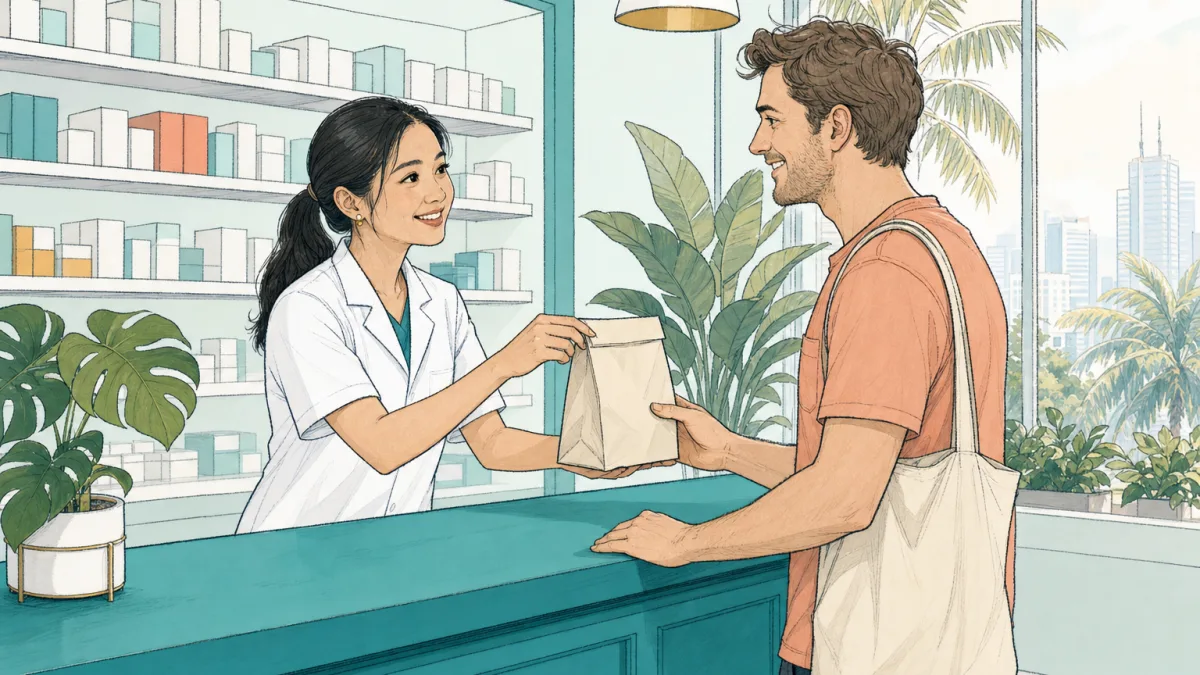
Singapore has a well-developed retail pharmacy scene, led by familiar chains such as Guardian, Watsons and Unity, alongside pharmacies inside clinics and hospitals. A registered pharmacist can advise on everyday health needs and is the natural first stop for minor illnesses. There is effectively no language barrier: the UK Foreign Office’s Singapore health advice notes that English is almost universally spoken, so hospitals, whether public or private, have English-speaking staff, and the same holds for pharmacy counters, though stock and opening hours still vary by location.
For everyday needs, a retail pharmacy is usually the first stop. It helps to come prepared: know the active ingredient and strength of what you want, not just the brand from home, and bring the empty box or a clear photo if you can. The CDC’s Singapore travel guidance suggests carrying a card, in the local language, listing the generic names of what you take, which does the same job if you have not brought the packaging. The pharmacist can then match you to the local equivalent far more easily.
Pharmacy, clinic or hospital: which should I use?
Use a retail pharmacy for minor, familiar needs. Use a clinic or hospital for a diagnosis, a prescription, a new or ongoing condition, or a repeat of a long-term medicine. Singapore has plenty of both, and its public and private hospitals are used to international patients.
For a diagnosis, a prescription or ongoing care, you have a choice between public primary care at the government polyclinics and the many private GP clinics, which are quick and convenient though pricier. For anything serious or an emergency, Singapore’s public and private hospitals are excellent. The cost and the wait differ between these routes, so it is worth noting your nearest clinic and hospital when you arrive. If you take a regular medicine, a single visit to a doctor early on can set up a clear record of what you take, which makes every refill afterwards simpler. HSA’s own fallback advice, for anyone whose import approval has not come through in time, is the same: see a practitioner registered with the Singapore Medical Council, findable through the HealthHub directory or the GPGoWhere clinic finder, for the medicine or a suitable local substitute.
What does medicine cost in Singapore?
Prices vary by pharmacy type and by brand, and Singapore is one of the more expensive markets in the region. The UK Foreign Office describes Singapore healthcare in the same terms: high quality, and expensive. The same medicine can cost different amounts at a hospital pharmacy, a chain pharmacy and a private clinic, and an original brand costs more than a generic of the same active ingredient. Ask for the active ingredient, the strength and the generic option before comparing prices.
Much of what is sold is a generic, the same active ingredient as a well known brand without the brand price, which is the everyday way medicine is supplied across the region. Choosing the generic version, where one exists, is usually the simplest way to keep costs down without changing the treatment itself, and the saving is more meaningful in a high-cost market like this one. If you take something regularly, it can pay to compare the local price against ordering it once you know the active ingredient. Our guide to buying generic medicines in Asia explains why the generic is usually the smart choice.
How do I find my medicine by active ingredient?
Read the active ingredient on the box, not the brand. Every medicine has one international name for its active ingredient and any number of brand names on top. The brand you relied on at home may be sold under a different name in Singapore, yet the same active ingredient almost certainly is available.
A common pain reliever such as paracetamol is sold under several names here, and an antibiotic such as amoxicillin in the same way. Once you know the active ingredient and the strength, matching the local product is straightforward, and it makes comparing prices far easier because you are comparing like for like. Our active ingredient pages group the brands that share a molecule, so you can recognise your medicine wherever you are, and you can also browse by category or by condition.
Can I bring prescription medicine into Singapore?
Usually yes, for personal use, but keep the medicine in its original packaging and carry a prescription or doctor’s letter. Controlled substances and certain other medicines need HSA approval in advance, and some medicines are prohibited. Always check your exact medicine before you travel.
The Health Sciences Authority (HSA) is strict about importing medicines but unusually clear about the rules, which makes compliance easy if you prepare. Its guidance on travelling with personal medications is the place to start. The core of it is straightforward:
- For ordinary medicines that are not prohibited and do not need approval, you may bring up to three months’ supply for your own use.
- Carry a copy of a valid prescription or a doctor’s letter from your home country.
- Keep each medicine in its original container or packaging, labelled with your name, the medicine name and the quantity.
- Bring medicines only for yourself or an immediate family member they were prescribed for, not for other people.
The important exception is controlled substances and certain other medicines, which need prior approval before you arrive. The HSA asks you to apply at least two weeks ahead so there is time to process it, and approval is tied to your stated arrival date. Some medicines are prohibited outright. Because the classification depends on the exact active ingredient, the reliable step is to check your specific medicines against the “Checking your medication” section of HSA’s personal medications page before you travel, rather than assuming. Prohibited items include anything on the Fourth Schedule to the Misuse of Drugs Regulations, such as cannabis and cannabis extracts, medications in chewing gum form, and Cell, Tissue and Gene Therapy Products such as stem cells; controlled substances needing approval are drawn from the Second and Third Schedules to the Misuse of Drugs Regulations and the First Schedule to the Health Products (Therapeutic Products) Regulations 2016. Once approved, you do not need to declare the medicine at customs, but keep the approval email and supporting documents ready in case an Immigration and Checkpoints Authority officer asks to see them. A few minutes checking beforehand, well before you fly, removes any uncertainty.
Regulatory note: HSA personal-import guidance for this article was last checked on 5 July 2026. Rules can change, especially for controlled and prohibited medicines. Always verify the exact medicine against current HSA guidance before you travel.
What if my medicine is hard to find, or I run out?
First confirm the active ingredient, strength, dosage form and legal status in Singapore. For ongoing treatment, a local doctor, clinic or hospital pharmacy is often the safest route: the UK Foreign Office’s Singapore health advice makes the same point, that not every medicine available at home is stocked here, and a local doctor can issue a prescription for the equivalent. Some people also use a licensed online pharmacy for non-urgent refills, in which case the supplier should clearly show who dispenses the medicine, where the pharmacy is licensed, whether a prescription is required, and how restricted medicines are handled.
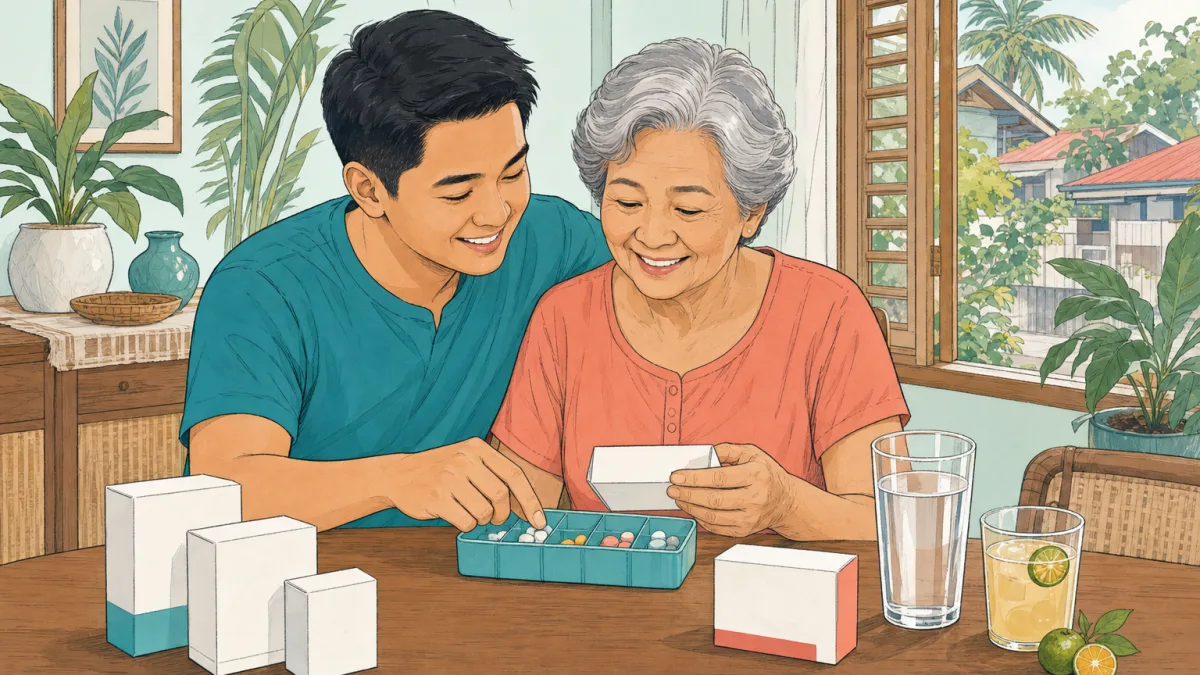
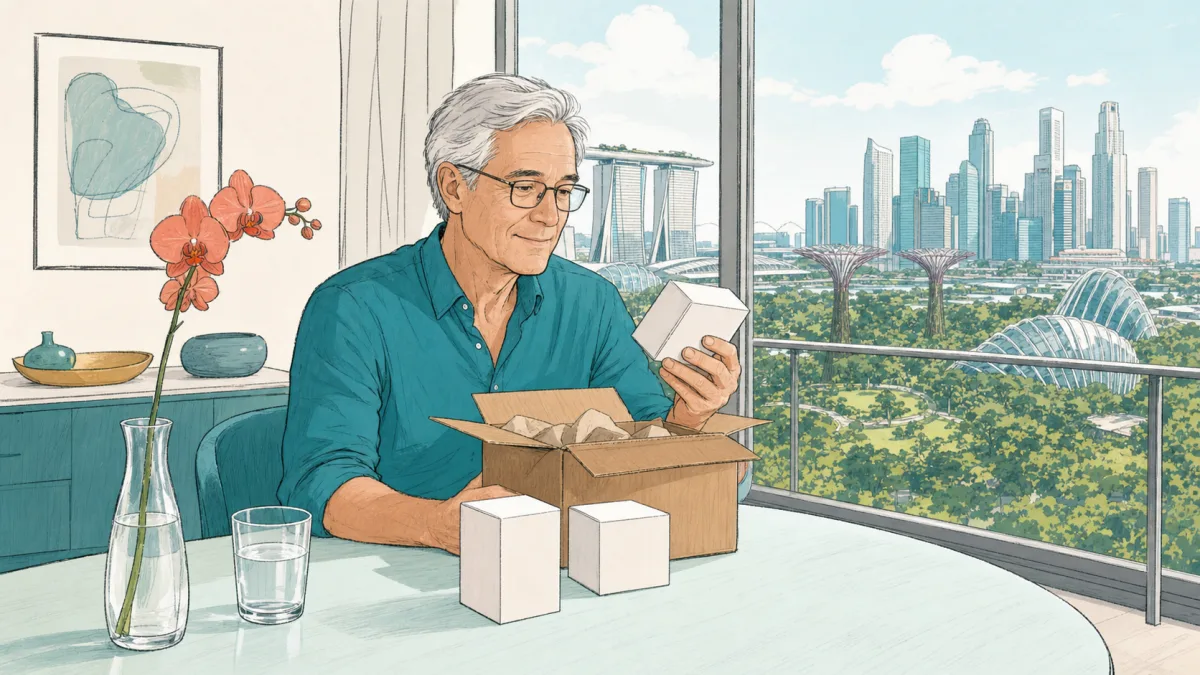
For a medicine you take every day, the priority is never running out. Many expats set up with a GP or clinic early, which gives a clear record of what they take and makes each refill simpler. From there you can buy locally, or order and have your medicine delivered, whichever is steadier and better value where you live. A gap in a blood-pressure, thyroid or diabetes medicine is worth real effort to avoid, so plan a few weeks ahead rather than days. Where only the pricier brand is stocked nearby, ordering the generic by its active ingredient and having it sent can keep the supply going at a sensible price. ZoneMD option: ZoneMD lets you search by active ingredient and compare the available brand and generic options, with dispensing and delivery handled by licensed pharmacy partners. Our how ordering works page walks through each step, from finding a medicine to receiving the parcel.
How do I check that medicine is genuine?
Check the pack and the seller. A genuine pack arrives sealed and undamaged, with the active ingredient, strength, maker, batch number and expiry all clearly printed and matching across the box and the blister. Loose tablets in an unmarked bag, smudged printing, or a missing batch and expiry are reasons to pause and ask.
Singapore is one of the better-regulated medicine markets anywhere, so the risk of fakes from a legitimate local pharmacy is low; the WHO’s global estimate is that at least 1 in 10 medicines in low- and middle-income countries fail quality control, and it traces most of the falsified supply to online sellers and informal markets rather than licensed pharmacies. The sensible discipline still applies here too: buy from established, licensed pharmacies and reputable online sources rather than unknown sellers, and know the active ingredient and what the genuine product should look like. Our guide to buying generic medicines in Asia covers genuine-pack checks in more detail, and the World Health Organization publishes plain advice on substandard and falsified medicines.
How should I store medicine in Singapore’s heat and humidity?
Keep medicines cool, dry and out of direct sun, and leave tablets in their original blister until you take them. Singapore’s climate is hot and humid year round, and heat and humidity break the active ingredient down faster, so a tablet that would keep to its printed expiry in a cool country can lose strength sooner here.
The worst storage spots are often the ones people pick by habit, the bathroom cabinet and the kitchen shelf, where steam and heat gather. A bedroom drawer or a cupboard in an air-conditioned room beats a sunny windowsill or a hot car. A few medicines need a fridge, which the pack will tell you. If a tablet looks discoloured, soft or crumbling, do not take it, and buy sensible quantities rather than a large stockpile so nothing sits too long in the heat.
Do and don’t
Do:
- Ask for the active ingredient and strength, not just a brand name.
- Keep the box and leaflet, and check the batch number and expiry.
- Carry a prescription or doctor’s letter for regular and controlled medicines.
- Use a clinic or hospital for ongoing conditions and anything that needs assessment.
- Check your specific medicines on the HSA online tool before travelling, and apply early for anything that needs approval.
- Bring enough of any regular medicine to cover settling in, plus a margin.
Don’t:
- Rely only on a foreign brand name the local pharmacy may not stock.
- Buy loose tablets in unlabelled bags, or packs with smudged printing or no batch and expiry.
- Store medicines in the bathroom, the kitchen or a hot car.
- Travel with controlled or prohibited medicines without checking the HSA rules first.
- Self-prescribe antibiotics or controlled medicines to save a clinic visit.
- Leave refills until the last few tablets.
Frequently asked questions
Do I need a prescription to buy medicine in Singapore? It depends on the medicine. Many everyday medicines are available at retail pharmacies with pharmacist advice, but some involve seeing a doctor first and controlled medicines are restricted. For anything you take for an ongoing condition, a clinic assessment is the safer route.
Can I use a prescription from my home country in Singapore? A foreign prescription is useful documentation and helps a pharmacist or doctor understand what you take, and the HSA asks you to carry one when bringing your own supply in. The CDC’s travel advice for Singapore goes further: check with your home embassy that the specific prescription is legal to bring, since the legal status of a medicine can differ by country. It does not automatically entitle you to dispense a medicine here, so for a controlled medicine expect a local assessment.
Can I bring sleeping, anxiety, ADHD or strong pain medicines into Singapore? These often contain controlled substances under the Misuse of Drugs Regulations, so treat them as check-first. Confirm the requirement on the “Checking your medication” section of HSA’s personal medications page, apply for approval at least about two weeks before you arrive, and keep them in original packaging with a doctor’s letter. Some medicines are prohibited outright, so verify your exact medicine before you travel.
Where to go next
The simplest way to stay supplied in Singapore is to think in active ingredients, not brands, and to know the two things that matter here: the cost, which you manage with generics and by comparing options, and the HSA import rules, which are strict but clearly laid out. Learn the name of what you take, check it against whatever you are offered, and you can match the same medicine at any pharmacy in the country or have it delivered. Browse by active ingredient, by category or by condition, and see how ordering and delivery work when you are ready.
Travelling elsewhere in the region? We have matching guides for Thailand, Malaysia, Hong Kong, the Philippines and Bali.
This guide is general information, not medical or legal advice, and import rules can change. For anything that depends on your own medicine or your own situation, check the current HSA guidance or ask a qualified healthcare professional.
Useful links
- Health Sciences Authority: travelling with personal medications into Singapore
- Health Sciences Authority: “Checking your medication” section of the personal medications page
- UK Foreign Office: Singapore travel advice, health
- CDC: Singapore traveller health