
Amoxicillin
Amoxicillin is one of the most commonly prescribed antibiotics worldwide, used to treat a broad range of bacterial infections. Well-known brands include Amoxil and Augmentin, alongside several generic alternatives such as Cenmox, Trimox and Advent DT. With five formulations listed on this page, you can compare strengths and dosage forms before discussing options with your doctor.



Key points
- Combined with clavulanic acid in products such as Augmentin, which blocks a bacterial enzyme that would otherwise break amoxicillin down.
- Also used together with other medicines to treat stomach ulcers caused by Helicobacter pylori, alongside its role in respiratory and urinary infections.
- Dispersible tablets that dissolve in water offer an easier option for children or anyone who struggles to swallow pills.
What is Amoxicillin?
Amoxicillin belongs to the penicillin group of antibiotics, a class of medicines developed in the mid-20th century that remains central to modern infection care. It works by interfering with the ability of bacteria to construct their protective cell walls, causing them to break down and die. This mechanism makes it effective against a wide variety of bacterial species, which is why it appears on the World Health Organization’s list of essential medicines.
Multiple brands and generic versions exist because the patent on amoxicillin expired decades ago, allowing different manufacturers to produce it. Some formulations combine amoxicillin with clavulanic acid, an enzyme inhibitor that extends its effectiveness against resistant bacteria. This combination is sold under names like Augmentin and Co-amoxiclav, while standard amoxicillin is available as Amoxil, Cenmox, Trimox and others.
What Amoxicillin is used for
Amoxicillin is prescribed for infections caused by susceptible bacteria. Common uses include respiratory tract infections such as bronchitis and pneumonia, ear infections, sinusitis, urinary tract infections and skin infections. It is also used in combination therapies for certain stomach ulcers caused by Helicobacter pylori. For a broader overview, see Bacterial Infection.
The specific infection being treated determines the formulation, strength and duration your doctor selects. Amoxicillin combined with clavulanic acid is often chosen when the causative bacteria are known or suspected to produce enzymes that would otherwise break down standard amoxicillin.
How does Amoxicillin work?
Amoxicillin targets the cell wall that surrounds and protects most bacteria. Without an intact wall, bacteria cannot survive the internal pressure that builds up inside them. Think of it as removing the scaffolding from a building under construction, the structure simply collapses.
Specifically, amoxicillin binds to proteins involved in the final stage of cell wall assembly. This weakens the wall and causes the bacterial cell to burst. Because human cells do not have cell walls, the medicine selectively harms bacteria while leaving your own cells largely unaffected.
Amoxicillin brands and forms
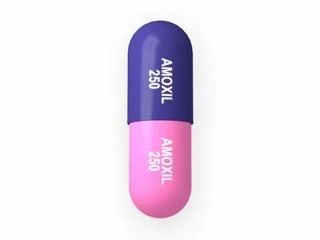
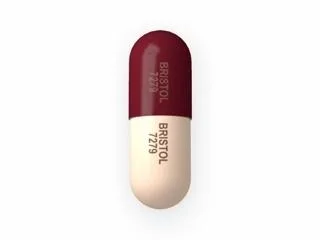
Amoxicillin is available in several dosage forms to suit different needs. These include standard tablets, capsules, film-coated tablets and dispersible tablets that dissolve in water for easier swallowing. The dispersible form is particularly useful for children or anyone who has difficulty swallowing pills.
Standard amoxicillin products include Amoxil, Cenmox, Trimox and Advent DT. Augmentin and Co-amoxiclav contain amoxicillin paired with clavulanic acid, broadening the range of bacteria they can treat. Within the Antibiotics category, you will find both single-agent and combination formulations listed on this page.
Safety overview for Amoxicillin
What to check before using this medicine
Before starting amoxicillin, your doctor needs to know whether you have any allergy to penicillin or cephalosporin antibiotics. A history of allergic reaction to these medicines usually means amoxicillin should be avoided entirely. Kidney function, pregnancy status and any history of liver problems are also relevant factors your doctor will consider.
Possible reactions and tolerability
The most commonly reported effects involve the digestive system, including nausea, diarrhoea and occasional vomiting. Some people develop a skin rash, which should be reported to a doctor promptly, especially if it appears alongside itching or breathing difficulty. Oral or vaginal thrush can occur because antibiotics sometimes disrupt the balance of harmless organisms that normally live in the body.
Interactions and health factors
Amoxicillin may interact with methotrexate, some anticoagulants and oral contraceptives. If you take any of these, your doctor will weigh the implications before prescribing. Live typhoid vaccine effectiveness can be reduced if taken at the same time as amoxicillin, so timing between the two matters.
Product labelling and verified clinical sources remain the correct references for specific contraindications, interactions and reactions.
Further reading
Related articles

23 Sept 2026 ⋅ 10 min read
Buying Generic Medicines in Asia: Safety, Indian Generics & Sourcing for Expats
How to buy generic medicines in Asia: bioequivalence and safety, why Indian generics are trusted, checking a pack is genuine, generic vs branded generic, storage in a hot climate and how delivery works.
Read guide
23 Sept 2026 ⋅ 9 min read
Buying Medicine in Bali: Pharmacy, Prescription & Import Rules for Nomads
How to buy, bring in and store medicine in Bali: how apotek pharmacies work, Indonesia's strict import rules, finding your medicine by active ingredient, generics, storage and safety checks.
Read guide
23 Sept 2026 ⋅ 10 min read
Buying Medicine in Hong Kong: Pharmacy, Prescription & Import Rules for Expats
How to buy, bring in and keep your medicines in Hong Kong: registered pharmacies and the Rx logo, Drug Office import rules, finding your medicine by active ingredient, costs, generics, storage and delivery.
Read guide
23 Sept 2026 ⋅ 7 min read
Buying Medicine in Malaysia: Pharmacy, Prescription & Import Rules for Expats
How to buy, bring in and store medicine in Malaysia: how pharmacies work, NPRA registration and import rules, finding your medicine by active ingredient, costs, MM2H notes, storage and safety checks.
Read guide
23 Sept 2026 ⋅ 12 min read
Buying Medicine in Singapore: Pharmacy, Prescription & Import Rules for Expats
How to buy, bring in and store medicine in Singapore: how pharmacies work, HSA personal-import rules, finding your medicine by active ingredient, generics, storage and safety checks.
Read guide
23 Sept 2026 ⋅ 6 min read
Buying Medicine in Thailand: Pharmacy, Prescription & Import Rules for Expats
How to buy, bring in and store medicine in Thailand: how pharmacies work, Thai FDA personal-import rules, finding your medicine by active ingredient, generics, storage and safety checks.
Read guide