
Key facts
- Compare the active ingredient, strength and dosage form when a familiar brand has a different name abroad. The FDA requires these to match for an FDA-approved generic.
- Check the approval and manufacturer. The FDA requires an approved generic to demonstrate bioequivalence to its reference brand.
- India is one of the world’s largest generic suppliers; many plants meet international standards and supply Western markets, but quality still depends on the individual manufacturer.
- An intact pack with a clear maker, batch number and expiry gives you a starting check. Packaging alone cannot prove that a medicine is genuine; use a licensed seller.
- Compare prices by product and pharmacy. A plain generic usually costs less than a branded generic, and the original brand often costs more again.
- Store medicines as the label directs. Keep tablets in their original blister in a cool, dry place out of direct sun, unless their instructions say otherwise.
- Import rules differ by country and medicine; check your destination’s customs and health authority guidance and keep medicines in original labelled packaging.
A familiar brand name may disappear when you cross a border. The active ingredient on the pack is a better starting point for finding a local equivalent.
What is a generic medicine?
A generic medicine has the same active ingredient, in the same strength and dosage form, as a brand-name product that came before it. The active ingredient is the part that does the work. When the original maker’s patent ends, other manufacturers can produce the same molecule, which is why one medicine can appear under many names at very different prices.
A generic is not a copy of lower quality. It has to deliver the same amount of the active ingredient into the body, within tight limits, before it can be sold. The brand on the box changes. The chemistry that treats you does not.
Are generic medicines as safe and effective as the brand?
For the vast majority of medicines, yes. Before a generic reaches the market, the maker has to show that it is bioequivalent to the original, meaning it releases the same active ingredient into the bloodstream at essentially the same rate and amount. Regulators set a narrow window for this, so a generic cannot be meaningfully weaker or stronger than the brand it copies. The US FDA explains generic-drug facts and bioequivalence in terms a non-specialist can follow, and the European Medicines Agency defines generic and hybrid medicines the same way.
The differences that remain are cosmetic for most people: the colour, the shape, the coating, the name. A person who has taken amoxicillin as a branded antibiotic and then as a generic is getting the same treatment either way. If you have ever had a reaction to a specific filler or dye, that is worth raising with a doctor, but it is the exception, not the rule.
Why are generic medicines cheaper?
The price gap is not a quality gap. The original maker spends years and large sums developing a new medicine, running trials and marketing the brand, and recovers that cost while the patent protects it. A generic maker starts after the science is settled and the patent has expired, so it carries none of that original research cost.
The FDA attributes lower generic prices in part to competition after patents and exclusivity expire. That does not set the price at a pharmacy in Asia. Compare the shelf price of the actual products available to you; repeated purchases of a cholesterol or blood-pressure medicine make the difference more consequential.
Are generic medicines from India safe?
Indian generics are widely trusted, but quality depends on the individual manufacturer, not the country. India is one of the largest suppliers of generic medicines in the world, and supplies them to clinics, aid programmes and patients across Asia, Africa and Western markets alike. Many Indian factories are built to international manufacturing standards and are inspected by overseas regulators, which is why their products are accepted far beyond India’s borders. The WHO prequalification programme assesses generic makers against international quality standards, and many Indian plants supply medicines through it.
As with any country, quality depends on the individual manufacturer, not the flag on the box. A well run Indian plant producing a quality-assured generic is a world away from an unregulated backstreet operation anywhere. The sensible approach is to look at who made the medicine and whether the pack is intact and genuine, rather than to assume that Indian means lower quality. For most expats in Asia, Indian generics are simply the everyday way medicine is supplied.
Why does the same medicine have so many different names?
The active ingredient has its own name; companies can market products containing it under different brand names. Sildenafil and tadalafil each appear under several labels. A traveller looking for an equivalent should compare ingredient, strength and dosage form rather than ask only for the brand used at home. The active ingredient pages show products grouped this way. The medicine brand-name decoder shows where to find that information on an unfamiliar box.
Are generic medicines available across Asia?
Generics are the backbone of medicine supply across most of Asia, but which brands are stocked varies by country. What changes from country to country is which brands are on the shelf, what they are called locally, and how easy a particular item is to find. A medicine that fills the shelves in one country can be hard to track down in another, even when both are a short flight apart.
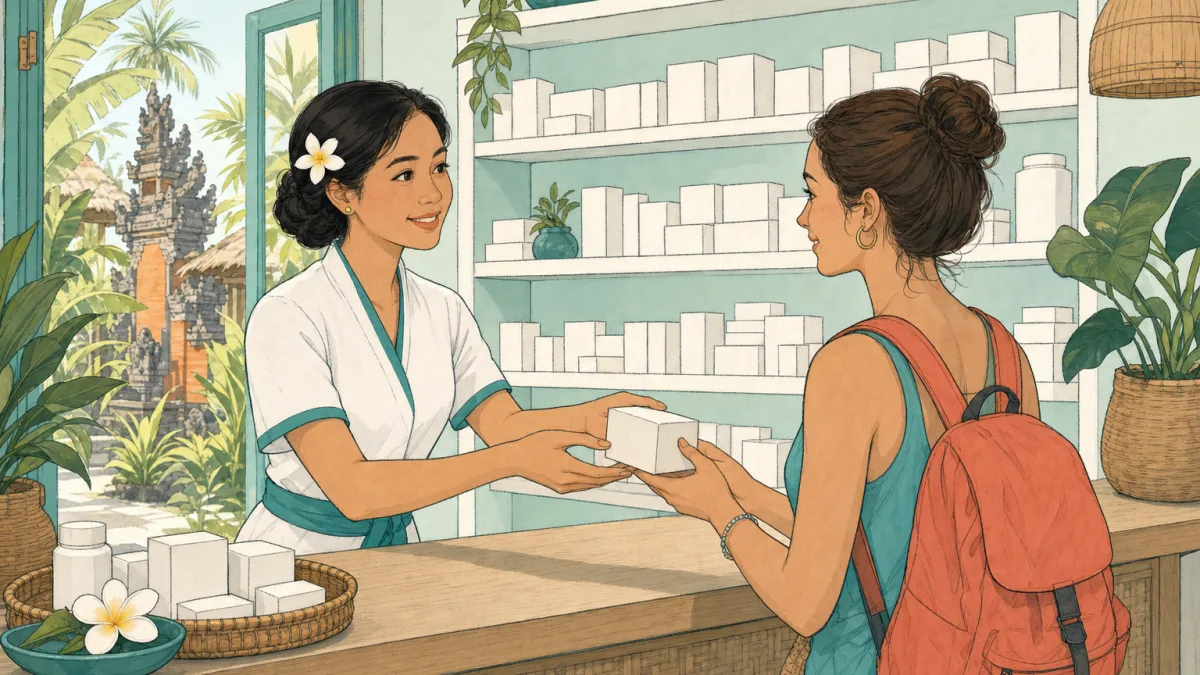
A pharmacist can search by ingredient when your home brand is missing. The Thailand, Singapore and Philippines guides cover local pharmacy access.
Can I order generic medicines online and have them delivered?
Check the dispensing pharmacy and local rules before ordering online. WHO links unauthorised online sellers to substandard and falsified products. A local clinician or hospital pharmacy can help with repeat treatment. ZoneMD groups options by ingredient; its ordering guide describes the pharmacy-partner process.
How can I tell if a generic medicine is genuine?
A tidy-looking box cannot prove what is inside. WHO estimates at least 1 in 10 medicines in low- and middle-income countries are substandard or falsified. Its fact sheet says unauthorised online sellers and informal markets are common routes. If the pack is damaged or the batch and expiry details are missing, take it to a pharmacist. Do not accept loose, unmarked tablets.
Beyond the pack, look at the source. A seller that shows you the active ingredient, the maker and honest information is more trustworthy than one that hides those details behind big promises. You can read how we check and present catalogue information on our how we research page. If a price or a claim looks too good to be true, treat it with caution.
How should I store medicines in a hot, humid climate?
Keep medicines cool, dry and out of direct sunlight, and leave tablets in their original blister until you take them. Heat and humidity break medicines down faster, so a tablet that would last to its printed expiry in a cool climate can lose strength sooner in a tropical one. Bathrooms and kitchens, where steam and heat collect, are the worst places to keep them.
Read the storage instruction on that pack. Leave tablets in the blister. Refrigerate only when the label calls for it; ask a pharmacist about tablets that have changed colour or texture.
Generic, branded generic or original brand: what is the difference?
All three contain the same active ingredient; they differ mainly in name and price. The original brand is the first version, from the company that developed the medicine. A plain generic is the same active ingredient sold under its chemical name or a simple label, usually at the lowest price. A branded generic sits in between: the identical active ingredient, but sold under a memorable brand by a generics company, which is very common across Asia.
All three contain the same molecule. The original brand often costs the most because you are paying for the name and its history. Branded generics give people a recognisable name they trust at a lower price, while plain generics offer the keenest price of all. None of this changes the treatment inside.
Do the inactive ingredients differ, and does that matter?
Inactive ingredients can differ, but for almost everyone they make no difference to treatment. Generics can use different fillers, binders and coatings that hold a tablet together and have no treatment effect. Regulators allow this, because these parts do not change how much active ingredient reaches you.
The FDA permits different inactive ingredients in an approved generic. If a dye, lactose filler or gelatin shell has caused you trouble, compare the old and new labels with a pharmacist or doctor.
Are there times when the original brand is the better choice?
For a small number of medicines, a doctor may prefer you stay on one version once you are stable. These are mostly medicines where small changes in blood level can matter, such as certain treatments for the thyroid, epilepsy or blood thinning. It is not that the generic is unsafe, only that switching back and forth is best done with medical guidance.
For the everyday majority, an antibiotic such as amoxicillin, a diabetes medicine such as metformin, a cholesterol medicine such as atorvastatin, the generic and the brand are interchangeable in practice. If you are ever unsure whether your particular medicine is one to keep consistent, ask a doctor or healthcare professional.
Can I bring or import generic medicines into my country?
Check the destination rules for your medicine before ordering or travelling. A familiar generic may still face import restrictions, especially if the ingredient is controlled. Quantity and documentation requirements depend on the country.
Because the detail differs everywhere, the safe habit is to check your destination country’s customs and health authority guidance before you order or travel, and to keep medicines in their original labelled packaging with anything that shows they are yours. Country guides such as bringing medication into Indonesia show how much this differs place to place. This FAQ is general information, not legal or medical advice, so when a specific medicine or country matters to you, confirm it with an official local source.
Do and don’t
Do:
- Read the active ingredient and strength on the box, not just the brand name.
- Check the pack is sealed and undamaged, with a clear batch number and expiry matching across box and blister.
- Buy from a licensed pharmacy or seller that shows the maker and honest information.
- Ask a pharmacist or doctor if you are unsure which local product matches your medicine.
- Store medicines cool, dry and out of direct sun, in their original blister.
- Check your destination country’s customs and health authority rules before importing.
Don’t:
- Assume a medicine is fake because it is a generic, or because it is made in India.
- Buy loose tablets in unlabelled bags, or packs with smudged printing or no batch and expiry.
- Trust a price or claim that looks too good to be true.
- Switch back and forth on a narrow-margin medicine (thyroid, epilepsy, blood thinner) without medical advice.
- Store medicines in the bathroom, the kitchen or a hot car.
- Carry controlled medicines across borders without checking the local rules first.
Where can I compare local medicine names?
Start with the active ingredient and check the strength and dosage form. Browse active ingredients, or search medicines by category or condition. If delivery is an option where you live, how ordering and delivery work explains the process.