Key facts
- Maintenance meds are taken every day for a managed condition: blood pressure, type 2 diabetes and cholesterol are the big three.
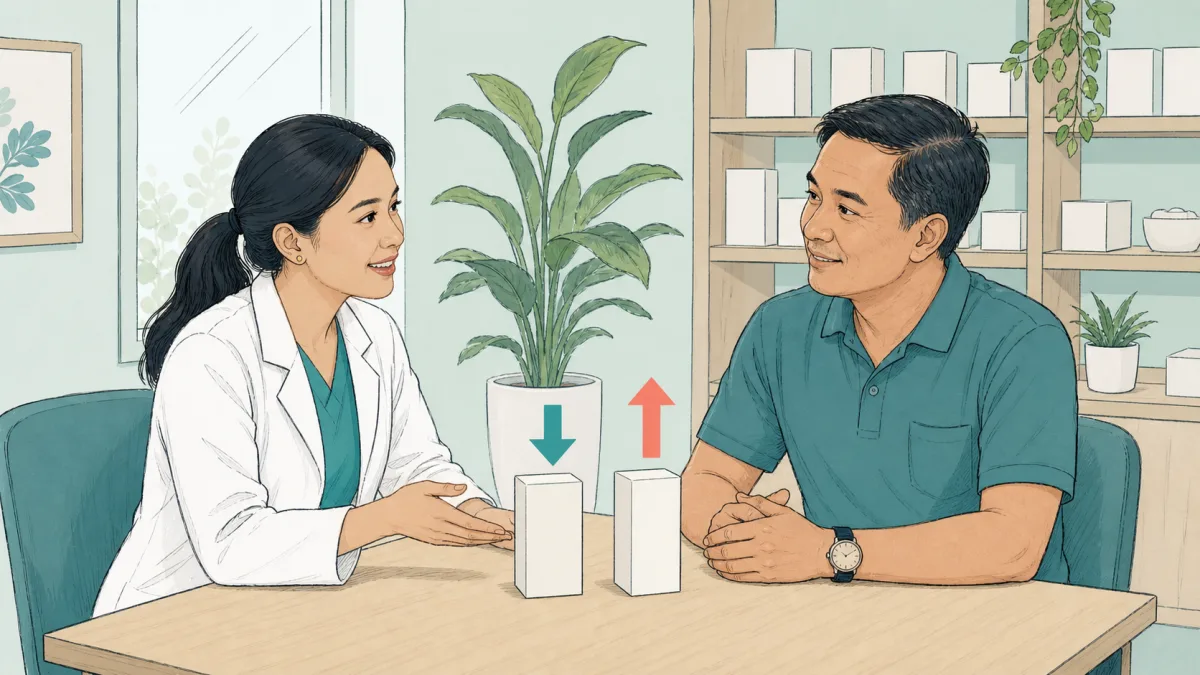
- Ask for the active ingredient and strength, since the same medicine is sold under many brand names and every generic shares that one ingredient.
- Choosing the generic version of the same active ingredient is usually the simplest way to cut the cost of a lifelong medicine.
- Filipino seniors aged 60 and over get 20 per cent off plus a VAT exemption on their medicines under the Expanded Senior Citizens Act.
- PhilHealth GAMOT provides up to ₱20,000 a year of free outpatient maintenance medicines per member, through the YAKAP programme.
- Many government health centres stock free maintenance medicines such as losartan, amlodipine and metformin, though stock varies by centre.
- For any long-term condition, the medicine and dose are set and reviewed with a doctor; steady supply is the part you manage day to day.
What are the common maintenance meds?
Most maintenance treatment uses a familiar set of medicines, available here as low-cost generics. For blood pressure, the common ones include amlodipine, losartan and telmisartan. For cholesterol, the statins atorvastatin and rosuvastatin. For type 2 diabetes, metformin is a common starting point.
You can browse these through the heart and blood pressure, cholesterol management and diabetes management categories, or look up a single medicine on its active ingredient page. Which medicine, or combination, is right for you depends on your readings, your other conditions and how you respond, so it is a decision made and reviewed with your doctor. We do not give doses here for that reason. What this guide can do is help you keep whatever you are prescribed both flowing and affordable.
How do I keep the cost down?
Stack the savings that repeat every month: the generic, the senior discount, PhilHealth GAMOT and free stock at government health centres. Because maintenance meds are a lifelong cost, small savings add up, and several of these can apply at once.
| Way to save | What it means |
|---|---|
| Choose the generic | The same active ingredient as a familiar brand, at a fraction of the price |
| Senior citizen discount | Filipino seniors get 20% off plus a VAT exemption on medicines, around a third off retail |
| PhilHealth GAMOT | Up to ₱20,000 a year of free outpatient maintenance medicines per member |
| Government health centres | Many stock free maintenance medicines such as losartan, amlodipine and metformin, though stock varies |
| Compare local vs delivery | Prices vary between drugstores, and delivery can be cheaper and steadier |
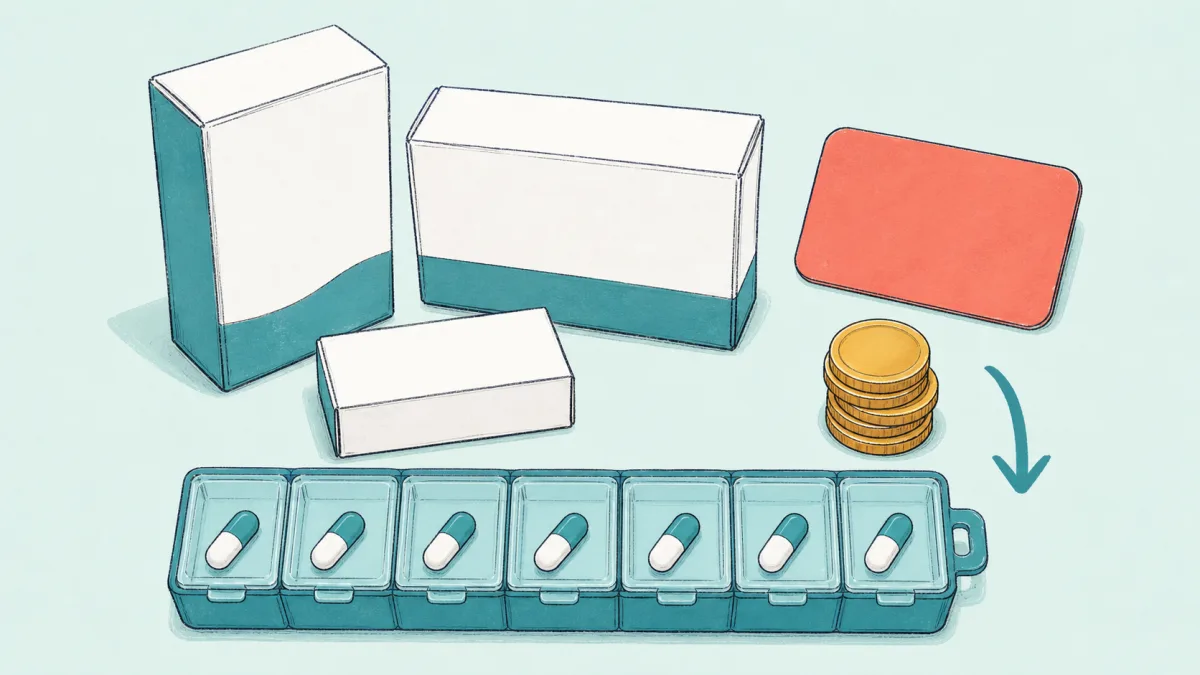
A few of these are worth a closer look. The senior discount, under the Expanded Senior Citizens Act, gives those aged 60 and over 20 per cent off plus VAT exemption on their medicines, which adds up substantially over a year. And the PhilHealth GAMOT programme, short for Guaranteed and Accessible Medications for Outpatient Treatment, provides up to ₱20,000 a year of free outpatient medicines per member for conditions including high blood pressure, diabetes, high cholesterol and asthma. It runs through PhilHealth’s YAKAP programme, so the practical steps are to register as a YAKAP beneficiary and get your prescription from an accredited provider; the current details are on the PhilHealth website. Prices still vary between drugstores and by brand, so it pays to check the generic option and compare before you buy. Stacked on top of cheap generics, these schemes can make ongoing treatment far more affordable.
How do I find my medicine by active ingredient?
Read the active ingredient on the box, not just the brand. The same amlodipine or metformin is sold under many brand names, and the active ingredient is what stays constant and what every generic shares.
Our active ingredient pages group the brands that share a molecule, so you can recognise yours and compare the brand against the cheaper generic. If a brand name has you stuck, our brand-name decoder translates dozens of familiar brands into their active ingredient. Once you can name the active ingredient and strength, matching the local product, and comparing prices, becomes straightforward.
How do I keep the supply steady?
Set up a routine reliable enough that you never reach your last few tablets without a plan. Many people start with a local doctor or health centre, which gives a clear record and an easy route to each refill.
From there you can buy locally, or have your medicine delivered on a schedule so it simply arrives. Our guide to getting medicine delivered in the Philippines covers the local options, and for the wider picture our guide to buying medicine in the Philippines walks through pharmacies, prescriptions and how the system works. Whichever route you use, arrive at each month with a margin rather than a gap, since a lapse in a blood-pressure, cholesterol or diabetes medicine is worth real effort to avoid.
Keep the clinic or health-centre pharmacy involved in each refill and review. If you use a delivery service, identify its dispensing pharmacy and confirm prescription requirements. The generic-medicines guide explains how to compare brands sharing an ingredient.
Should I check my readings at home?
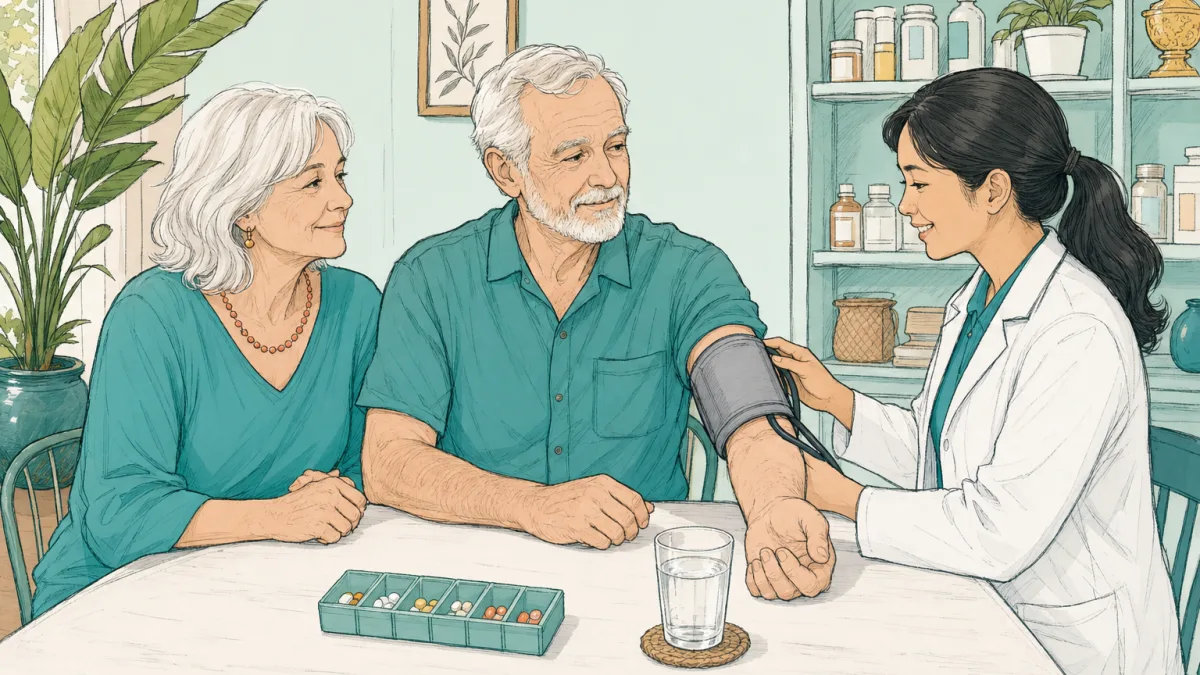
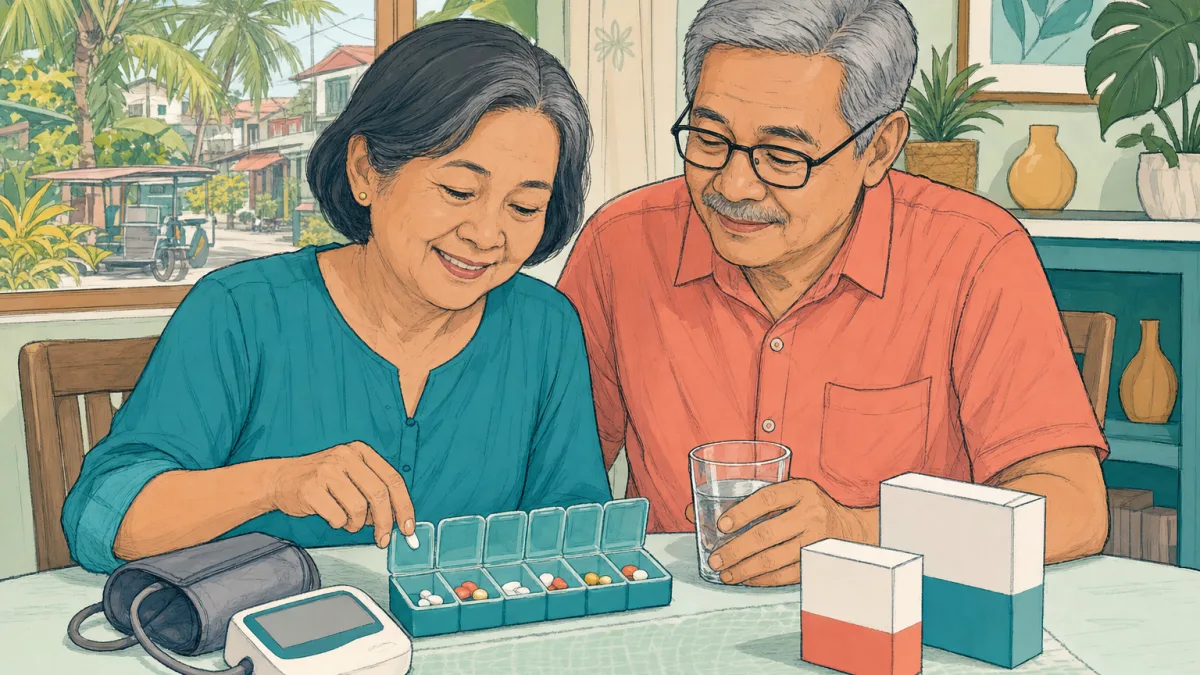
Keep the readings your clinician asks you to track and take them to regular reviews. A home blood-pressure monitor or a diabetes log can show changes between visits. Do not use a reassuring reading as a reason to stop prescribed medicine; a clinician can interpret the pattern with your history.
Do and don’t
Do:
- Ask for the active ingredient and strength, not just a brand name.
- Choose the generic version where one exists, and compare prices before you buy.
- Use the senior discount, PhilHealth GAMOT and free health-centre stock where you qualify.
- Set up a local doctor or health centre so each refill has a clear record.
- Keep enough of any regular medicine to cover the gap between refills, plus a margin.
- Keep your reviews and home checks going, since maintenance conditions are quiet.
Don’t:
- Assume a PhilHealth card alone gets the GAMOT medicines. The PIA describes YAKAP clinic registration, assessment, a coded prescription slip and collection with an ID at a GAMOT facility.
- Stop a maintenance medicine after a normal home reading; have the prescribing clinician review the readings and your next refill.
Where can I compare a prescribed medicine?
Start with the active ingredient and strength on your prescription. Browse ingredients, heart and blood pressure, cholesterol management or diabetes management. The Philippines medicine guide explains local pharmacies; ordering information covers delivery where appropriate.
This guide is general information, not medical advice. Your treatment, and any medicine, is a decision for a doctor who knows your health, and benefit details are set by the authorities, so check the official sources.
Useful links
- Philippine Information Agency: PhilHealth GAMOT, up to ₱20,000 of free outpatient medicines
- PhilHealth: official website and member programmes
- World Health Organization: hypertension
- World Health Organization: diabetes