
Key facts
- The class matters more than the brand. Weight effects follow the mechanism, so knowing the active ingredient tells you more than the name on the box.
- GLP-1 medicines produce the most consistent weight loss, followed by SGLT2 inhibitors, with metformin usually neutral to slightly down.
- Insulin, sulfonylureas, pioglitazone and repaglinide tend to add weight, for reasons that differ by class.
- DPP-4 inhibitors are broadly weight-neutral, which is sometimes exactly why they are chosen.
- Some gain is recovered weight, not new fat. Very high blood sugar spills calories into the urine; controlling it stops that loss, and the scales can rise even when things are going right.
- Weight is one factor among many. Kidney function, heart disease, hypoglycaemia risk, cost and supply all sit alongside it, which is why the same numbers lead to different prescriptions.
- Never stop or swap a diabetes medicine because of weight without review. Blood sugar can move quickly, and the risk of doing this alone outweighs the benefit.
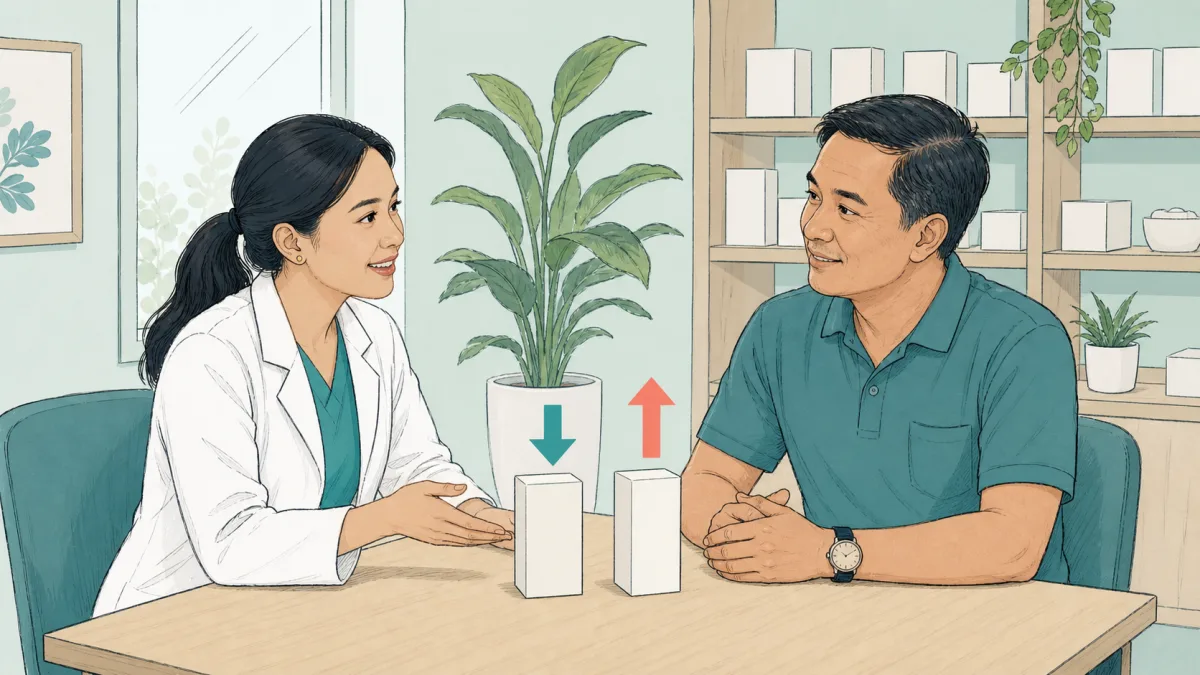
Two people can be handed prescriptions for type 2 diabetes on the same afternoon, follow them exactly, and find that one has quietly lost four kilograms by the next review while the other has gained three. Neither did anything wrong. The medicines simply pull in different directions, and weight is one of the clearest places where that shows. It matters more than it sounds: weight affects blood pressure, cholesterol, joints, sleep and how well the diabetes itself responds, so a medicine’s effect on the scales is a real part of the decision rather than a footnote. This guide sets out which classes tend to reduce weight, which tend to add it, which sit roughly neutral, and why the same medicine behaves differently in different people. It is background for a better conversation with your doctor, not a reason to change anything on your own.
Which diabetes medicines affect weight, and how much?
The classes do not all push weight in the same direction. These trial and clinical ranges describe groups; an individual’s result can differ.
| Class | Examples | Usual weight effect | Why |
|---|---|---|---|
| GLP-1 receptor agonists | semaglutide, liraglutide, dulaglutide | Loss, often several kg and sometimes much more | Reduced appetite, earlier fullness, slower stomach emptying |
| Dual GIP/GLP-1 agonists | tirzepatide | Loss, typically the largest of any class | Two gut-hormone pathways rather than one |
| SGLT2 inhibitors | empagliflozin, dapagliflozin, canagliflozin | Modest loss, roughly 2 kg to 3 kg | Glucose, and the calories with it, leaves in the urine |
| Biguanides | metformin | Neutral to modest loss | Less glucose made by the liver, better insulin sensitivity, mild appetite effect |
| Amylin analogues | pramlintide | Modest loss | Slows stomach emptying and dampens appetite |
| DPP-4 inhibitors | sitagliptin, vildagliptin, linagliptin | Broadly neutral | Boosts your own gut hormones, but far more gently |
| Meglitinides | repaglinide | Modest gain | Prompts insulin release around meals |
| Sulfonylureas | glipizide, glimepiride, gliclazide | Gain, often around 2 kg | Sustained insulin release, plus eating to manage lows |
| Thiazolidinediones | pioglitazone | Gain, sometimes several kg | Fat storage shifts, and the body holds fluid |
| Insulin | all types | Gain, varies widely with dose | Insulin is a storage signal, and calories stop leaving in the urine |
Some options are stocked unevenly or mainly used in specialist care. Compare the diabetes management and weight management listings with what your clinician offers locally.
Which medicines tend to reduce weight?
Weight loss with these medicines is a real effect of how they work, not a bonus side effect, which is why some of them are also licensed for weight management in their own right.
GLP-1 receptor agonists are the group that changed the conversation. They imitate a gut hormone that signals fullness and slows how quickly the stomach empties, so people eat less without fighting themselves at every meal. StatPearls describes the class acting on both glucose control and appetite regulation. Singapore’s National University Health System puts the class plainly: it increases insulin secretion, reduces appetite, slows digestion and causes weight loss. That last part is an effect of the medicine, not a promise to you, and it works alongside changes to diet and activity rather than instead of them. We cover the oral form in more detail in semaglutide tablets in Asia.
Tirzepatide works on two gut-hormone pathways rather than one and generally produces the largest reductions of any class. It is worth knowing the name, because it comes up constantly in weight conversations, though availability across Asia is patchy and it is not something we list.
SGLT2 inhibitors take a different route entirely. Rather than touching appetite, they make the kidneys pass glucose into the urine, so a few hundred calories a day leave the body. The result is a modest, steady loss of roughly 2 kg to 3 kg for most people, some of it fluid in the first weeks. NUHS describes the mechanism in four words: increases glucose excretion in urine. This class carries its own safety points, including a risk of genital and urinary infections and a rare but serious form of ketoacidosis, and the FDA maintains postmarket safety information for prescribers and patients.
Metformin sits at the boundary. It is usually the first medicine offered, and it is generally described as weight-neutral to mildly weight-reducing. StatPearls calls it weight-neutral with the potential for modest weight loss, which in this company is its own kind of advantage.
Which medicines tend to add weight?
Gain in this group is not a sign the medicine is failing. In several cases it is the visible side of the medicine doing precisely what it was prescribed to do.
Insulin is the clearest example. Insulin is the body’s storage signal, so more of it available means more glucose moved into cells rather than left circulating. There is a second, less obvious reason: when blood sugar runs very high, the body dumps glucose and its calories into the urine, which is why Hong Kong’s Centre for Health Protection lists weight loss among the symptoms of diabetes itself, alongside thirst and excessive urination. Restoring control closes that leak. Some of the weight that appears afterwards is weight the body should have been keeping all along. Dose matters a great deal here, and so does how often lows are happening.
Sulfonylureas such as glipizide, glimepiride and gliclazide push the pancreas to release more insulin steadily through the day, with a typical gain of around 2 kg. They also carry a genuine risk of hypoglycaemia, and the eating needed to correct or pre-empt a low adds its own calories. NUHS names weight gain and hypoglycaemia as the side effects to weigh when choosing between the oral options, and lists gliclazide, glipizide and glimepiride among them.
Thiazolidinediones improve insulin sensitivity. With pioglitazone, gain can reflect changed fat storage as well as retained fluid. StatPearls reports dose-related fluid retention in up to 20% of users, with higher risk in people already swollen or taking insulin. Its account links the fluid effect to sodium handling in the kidney. This matters in heart failure; a clinician needs to distinguish fluid from fat rather than assuming the scale shows only one.
Meglitinides such as repaglinide act on the same insulin-release mechanism as sulfonylureas but faster and for a shorter time, taken around meals. The weight effect is usually smaller for the same reason.
Which medicines mostly leave weight alone?
DPP-4 inhibitors are the quiet option, and being weight-neutral is often the point of choosing them. Sitagliptin, vildagliptin and linagliptin work on the same gut-hormone system as GLP-1 medicines, but indirectly: they stop your own hormones being broken down so quickly. The effect on appetite is far gentler, so weight generally holds steady. All three are listed together as the DPP-4 option in NUHS’s rundown of type 2 medicines, which is also a reminder of how they appear locally: Januvia, Galvus and Trajenta on Singapore shelves. For someone whose weight is already where they want it, and whose main need is better numbers without hypoglycaemia, that neutrality is a feature.
Why does the same medicine affect people differently?
Ranges exist because weight is not set by the prescription alone. A handful of factors explain most of the spread.
Where you started matters. People carrying more weight at the outset tend to lose more on the medicines that reduce it, and gain effects tend to be larger at higher insulin doses.
How well controlled your diabetes was before matters just as much, and this is the part most often misread. If sugar was running very high, calories were leaving in your urine. Any treatment that fixes that will show up on the scales, and reading it as the medicine “making you fat” gets the situation backwards.
Hypoglycaemia changes eating. On the classes that can cause lows, treating and anticipating them adds food to the day that has nothing to do with hunger. Fewer lows often means less of this.
Fluid is not fat. With pioglitazone in particular, and in the first weeks of an SGLT2 inhibitor in the other direction, some of the movement is water. It arrives faster than fat ever does, which is a useful clue.
Diet, activity, sleep and stress are still part of a weight trend, as are other medicines including some antidepressants and steroids. Singapore’s HealthHub has healthy eating and physical activity guidance; the WHO obesity overview treats weight management as a long-term task.
Above all, do not treat a weight effect as a reason to stop. A medicine that is holding your blood sugar steady is doing the job it was given. If the weight direction is wrong for you, that is a case for a review, where the options include a different class, a dose change, or adding something that pulls the other way.
What should I ask at my next appointment?
Bring the weight trend and your medicine list, then ask whether the change is likely to be fat, fluid or recovered weight. Questions worth taking along include:
- Which of my medicines is most likely to be moving my weight, and in which direction?
- Is what I am seeing likely to be fat, fluid, or weight I lost while my sugar was high?
- If weight is a priority for me, is there a class that would suit my kidneys, heart and hypoglycaemia risk as well as this one does?
- Would a dose change achieve the same control with less effect on my weight?
- What would you want me to report between now and the next review?
- If I need a refill abroad in three months, how do I avoid a gap that could undo steady glucose control?
Do and don’t
Do:
- Bring the weight trend and medicine list to review, including changes after insulin or pioglitazone.
- Take the active ingredient and strength to a pharmacist when refilling abroad.
Don’t:
- Stop or swap a diabetes medicine when the scales move; glucose control and any fluid change need review.
- Buy a GLP-1 pen or tablet from an unidentified online seller: fake products may have the wrong dose or contents. Singapore’s HSA warns about sellers offering prescription medicines without a prescription.
Frequently asked questions
Can I take a GLP-1 medicine just for weight loss? Some are licensed for weight management, but for people who meet specific clinical criteria, after an assessment, with monitoring, and alongside diet and activity. That assessment is the part that keeps it safe.
Useful links
-
Country buying guides: Singapore, Thailand and Malaysia; diabetes in Singapore covers treatment in one market.
-
NUHS Singapore: type 2 diabetes medications, class by class with local brand names
-
HealthHub Singapore: healthy eating tips and physical activity tips
-
StatPearls: metformin, GLP-1 receptor agonists and thiazolidinediones