
Key facts
- “Store below 30°C” describes tested conditions, not a cliff edge. One warm afternoon is rarely the problem. Months of warm afternoons are a different question.
- The bathroom cabinet is the worst habit in this climate, and the most universal. Heat plus steam plus humidity, several times a day.
- The kitchen is second, for the same reasons plus the stove, and the car is third and by far the most extreme.
- Form matters more than the drug. Effervescent tablets, eye drops, inhalers, liquids and anything refrigerated are the vulnerable ones.
- Deliveries spend real time in real heat. A forty-minute motorbike run in April is a condition nobody wrote on the box.
- You usually cannot tell by looking, which is why storage is preventive rather than something to inspect for.
- When in doubt, ask a pharmacist rather than guess. Binning medicine you need has its own cost.
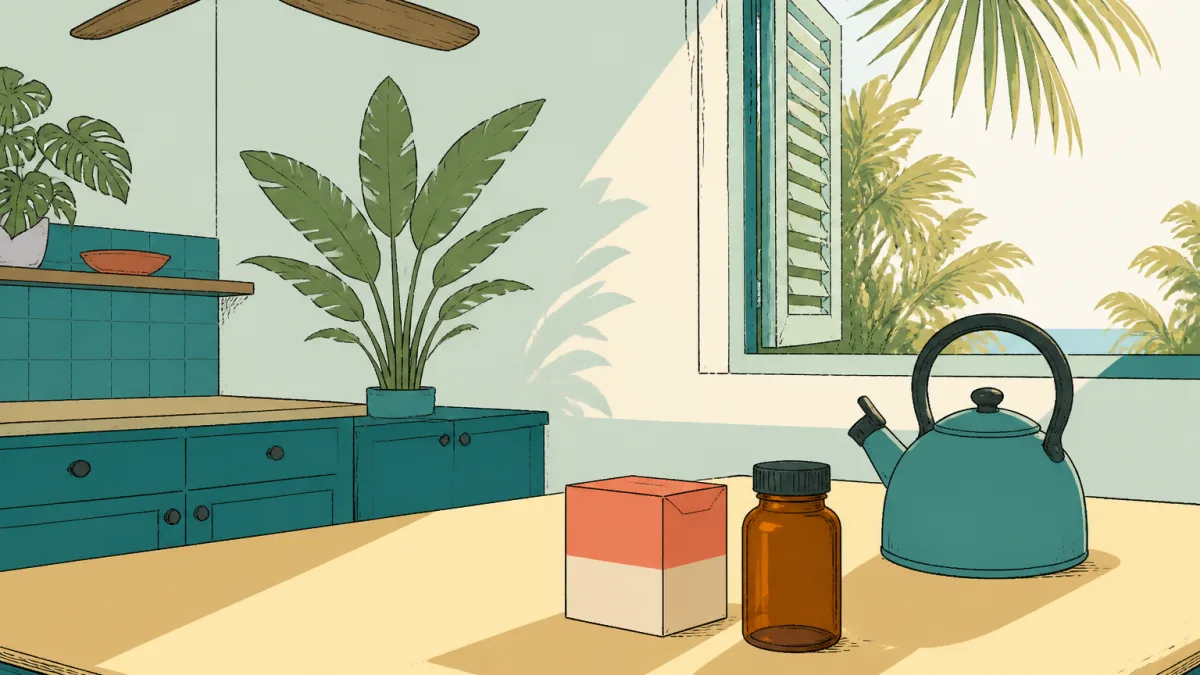
You are holding a box that says, in small type, to store below 30°C. Standing in a kitchen that has not been below 30°C at four in the afternoon since some time in March.
So either the instruction is wrong, or something is quietly going on with your medicines that nobody mentioned. It is neither, exactly, but the honest version is more useful than both.
What does the storage temperature on the box mean?
That line is not a threshold beyond which your tablets turn to chalk. It describes the conditions under which the manufacturer tested the product and can stand behind its shelf life. Stability testing is done in defined conditions, and the label reports them.
The reassuring part is true: a warm afternoon, a hot car journey, a few days in a suitcase are rarely the thing that ruins a medicine. Most solid tablets and capsules are considerably more robust than anxious people assume, and telling you otherwise would push you into binning medicines you need.
The part that is genuinely worth attention is duration and repetition. A cupboard that sits well above that number every afternoon for eight months is not a warm afternoon. Nor is a bathroom shelf that goes through a humidity cycle twice a day for a year. Degradation is cumulative and mostly invisible, and the practical consequence is not a dramatic failure but a medicine that is somewhat less potent than the label claims, at some point you cannot identify.
Singapore’s HealthHub covers the basics of storage and expiry, and the Ministry of Health’s managing your medication pages sit alongside it. The CDC’s clinical guidance on heat and medications approaches it from the other direction, covering how heat and medicines interact in the body as well as in the box.
Which rooms are hardest on medicines?
The bathroom cabinet is the worst, and it is what almost everyone does.
That is the emphasis of this article, because it is the single most common storage decision in the world and, in this climate, close to the least suitable place in the home. A tropical bathroom is warm to begin with, and then several times a day someone runs a hot shower in it and the humidity goes to the ceiling. Moisture is harder on many medicines than heat is, and the cycling between damp and less damp is harder still. Effervescent and dispersible tablets are designed to react with water, so a humid cabinet is asking them to do their job early.
The name is a historical accident. The cabinet is there because the plumbing was, not because a pharmacist chose the room.
The kitchen is second. Same heat, plus steam, plus a stove, plus the cupboard above the kettle, which is a small humidity chamber operating several times a day.
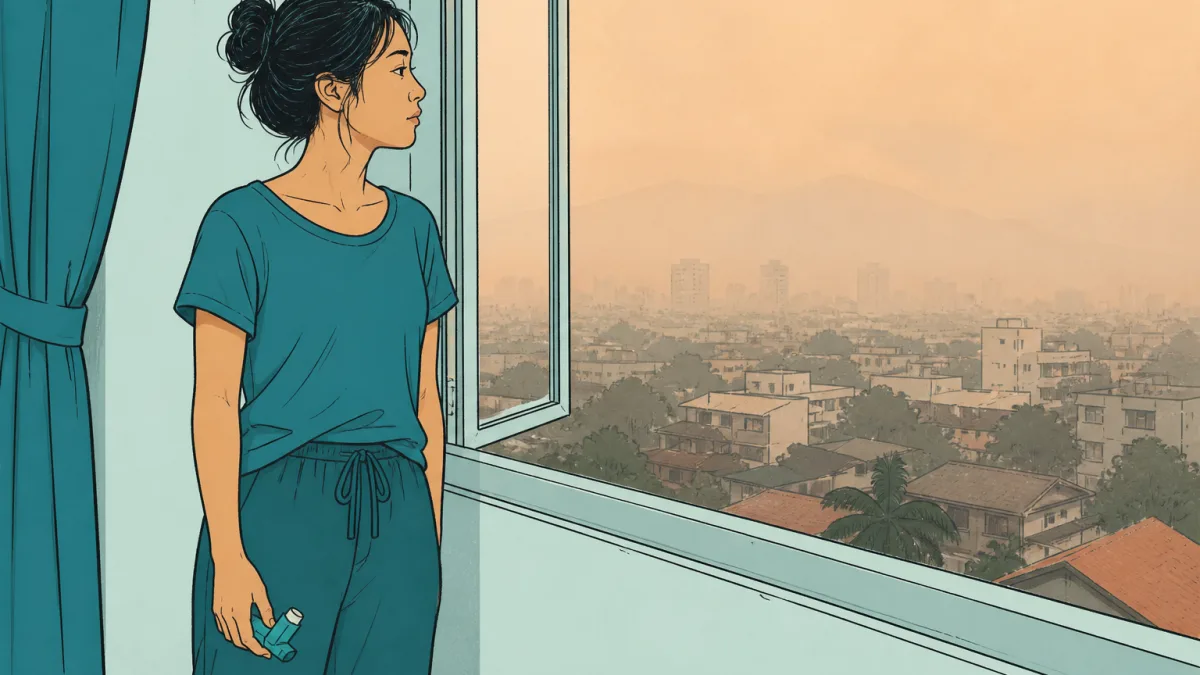
The car is third and worst by magnitude. A parked car in the tropics reaches temperatures far above anything a label contemplates, and a glovebox is the hottest part of it. This matters most for the things people habitually leave in cars: a reliever inhaler, an emergency medicine, a spare bottle of drops.
At home, use a bedroom drawer or wardrobe shelf away from the window. If an air-conditioned room is available, a box there is another option. The word “medicine” on a cabinet door does not make the bathroom dry. Check the conditions of the room instead.
Which medicine forms need the most care?
Start with the form, then read the product label. A blister of ordinary tablets and a bottle of made-up antibiotic liquid do not need the same handling. The label settles the question for the product in your hand.
| Form | How it copes | The practical point |
|---|---|---|
| Ordinary tablets and capsules | Generally the most robust | Keep them dry more than cool; leave them in their blister until use |
| Effervescent and dispersible tablets | Poorly, in humidity | The tube’s cap and desiccant are functional, not packaging |
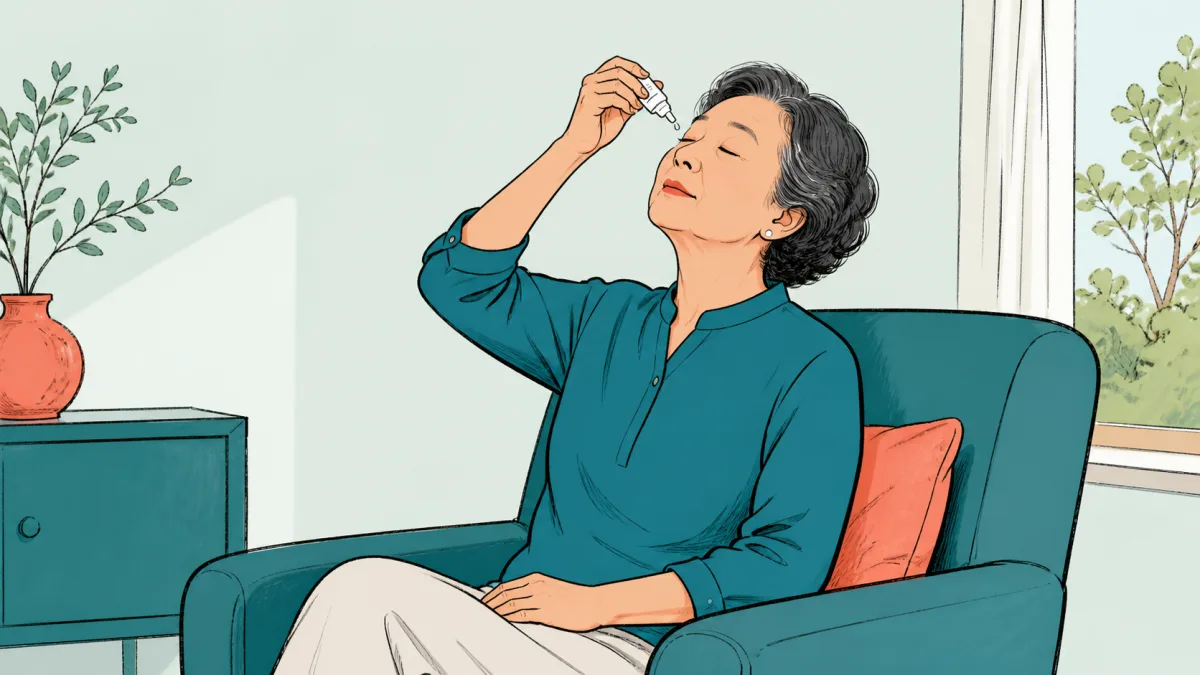
| Eye drops | Sensitive, and sterility is time-limited once opened | Note the day you opened them; see the glaucoma article |
| Inhalers | Pressurised canisters dislike heat and direct sun | Not the car, not the windowsill |
| Liquids and reconstituted antibiotics | Shortest life of anything here | Follow the pharmacy label exactly; many need refrigeration once mixed |
| Patches and gels | Heat changes how much is absorbed | Store cool, and keep heat off the applied patch too |
| Anything marked refrigerate | Needs its range, and freezing is also damage | The label decides, never habit, and never the freezer compartment |
A few specifics worth naming. Levothyroxine is a medicine where small differences in absorbed amount are noticeable, which makes storage worth doing properly. Salbutamol inhalers are the classic thing left in a car by exactly the person who will need one. Latanoprost sits in the eye-drop row and has its own storage rules before and after opening. Amoxicillin as a made-up liquid for a child is the shortest-lived preparation most households ever handle. Metformin is an example of the robust majority, taken by enormous numbers of people, which is worth saying so this article does not read as a warning about everything.
Browse what we list under heart and blood pressure, respiratory health, eye care and thyroid health; each product page carries its own storage line, which is the authoritative one for that product.
What does a hot delivery journey change?
The trip adds a period of heat exposure that the package will not describe. Home delivery is normal across this region and generally a good thing.
A package moving across a city at midday in April spends real time in real heat, sometimes in an unventilated box on the back of a bike. That is not a reason to avoid delivery. It is a reason to prefer sellers who think about it, to bring the package inside promptly rather than leaving it at a guardhouse until evening, and to take the cold chain seriously when something is meant to be refrigerated, which means being present rather than having it left at a door.
Our article on medicine delivery in the Philippines covers the practicalities, and buying generic medicines in Asia covers judging the seller, which is the larger question.
Can you tell whether heat damaged a medicine?
Mostly, you cannot.
Some changes are visible: tablets that have become soft, sticky, crumbly, mottled or discoloured; capsules stuck together; a liquid that has separated, changed colour or thickened; drops that have gone cloudy; a smell that is new. Anything in that list is a reason not to use it.
But loss of potency is usually invisible. A tablet that has spent a year in a hot damp cupboard looks exactly like one that has not. There is no household test, which is precisely why storage is preventive: you do it because you cannot inspect for the failure afterwards.
Which brings the useful rule. If something looks wrong, do not use it. If you are unsure, ask a pharmacist and take the packet with you. Do not throw away medicines you depend on because an article made you anxious, and do not assume something is fine because it looks fine.
How should you pack medicines for a flight?
Pack medicines in cabin luggage. A delayed or lost hold bag is a poor place for something you take every day. The hold’s temperatures are less predictable too. An inhaler that should not sit in a hot car still needs that care on a journey. Check the latanoprost packet as well: its storage instructions can differ before and after opening.
The original labelled packaging helps identify what you have and protects it. Split a long supply across two bags. If the label says refrigerate, ask a pharmacist how to maintain the cool chain for that particular product. A cabin bag alone is not a refrigeration plan.
Do and don’t
- Do choose a cool, dry drawer away from direct sun, and bring deliveries inside promptly.
- Do follow the label when a medicine needs refrigeration, and ask a pharmacist about uncertain heat exposure.
- Don’t keep a reliever inhaler in a parked car or tablets beside a kettle.
- Don’t discard a medicine you depend on solely because its packet had one warm afternoon; check with a pharmacist.
What else helps with medicine storage in the tropics?
The product label remains the first place to check. For heat and blood pressure medicines in the body rather than the box, see blood pressure medicine in a hot climate. For eye drops and their discard dates, see glaucoma drops. For inhalers through the burning season, see asthma and COPD in the haze season.
FAQ
Should I keep medicines in the fridge to be safe?
No. Refrigerate only what the label says to refrigerate. Cold and condensation cause their own problems, and a fridge is a humid environment when a box comes in and out of it.
My tablets were in a hot car for an afternoon. Do I throw them away?
Probably not, and that is not a decision to make from an article. A single exposure is usually far less important than months of poor storage. If it was something delicate, or something you depend on, ask a pharmacist.
Does air conditioning solve the problem?
It helps a great deal, because it lowers both temperature and humidity. The catch is that most homes are not air conditioned continuously, so the drawer in the room that is cooled is better than the cupboard in the room that is not.
What about the little sachet in the bottle?
It is a desiccant, there to keep moisture away from the tablets. Leave it where the manufacturer put it. If you want to move the tablets into a pill box, ask a pharmacist first whether that is suitable for this product.
Is an expiry date the same as a discard date?
No. Find the printed expiry on the strip or packaging, as HealthHub advises. That date assumes the unopened medicine was stored correctly. For eye drops and liquids, also check the discard instruction that applies once the container is opened. Write down the opening date; the unopened box’s expiry cannot tell you when that shorter period began.
Sources
- HealthHub Singapore, know about storage and expiry
- Singapore Ministry of Health, managing your medication
- CDC, heat and medications, guidance for clinicians
This article is general information, checked on 10 August 2026. It contains no doses, and it is not a substitute for advice from a pharmacist about a specific product.