

Key facts
- Semaglutide is a prescription-only medicine that needs a doctor’s assessment and monitoring, not a casual weight-loss buy.
- Ozempic, Wegovy and Rybelsus contain semaglutide. The NHS lists Ozempic and Wegovy as injections and Rybelsus as tablets.
- It is a GLP-1 receptor agonist, used under a doctor’s guidance for type 2 diabetes and, for people who meet specific clinical criteria, weight management alongside diet and activity.
- The tablet and injections are not interchangeable by assumption: the NHS lists the tablet for type 2 diabetes and the weight-management form as an injection. Ask the prescriber before changing form.
- Side effects are mostly digestive at first, such as nausea, vomiting, diarrhoea and constipation, which is why the dose is built up gradually under guidance.
- It is not suitable for everyone, and it interacts with your other medicines and health, which is what the assessment is for.
- The NHS warns about fake weight-loss medicines online. Use a registered pharmacy and a prescription; a convincing pack is no substitute for a legitimate source.
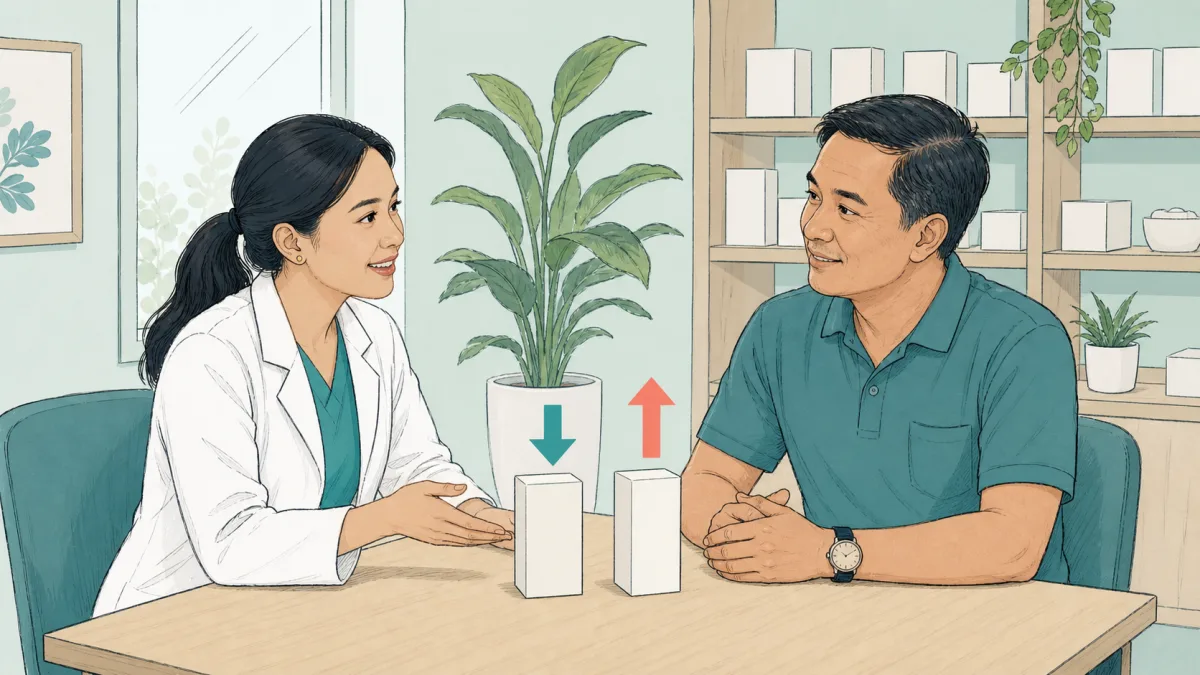
The brand on an injection pen and the brand on a tablet can differ while the active ingredient remains semaglutide. That shared ingredient does not mean you can change between the products yourself.
What is semaglutide, and is the tablet the same as Ozempic?
Semaglutide is one active ingredient sold under several brands and in two forms. Ozempic, Wegovy and Rybelsus are not different drugs: they are the same medicine, in different brands, forms and strengths. Ozempic and Wegovy are injections, and Rybelsus is the tablet.
The NHS calls it a GLP-1 agonist. In type 2 diabetes, it lowers blood sugar and helps the body make more insulin when needed. Its appetite effect helps some people eat less. NHS guidance distinguishes the tablet used for diabetes from the weekly injection used for weight loss.
How do the tablets differ from the injections?
The forms differ in how often you take them, not in the active ingredient. The NHS sums it up: semaglutide comes either as an injection you give yourself once a week, or as tablets you take once a day. The injections (Ozempic, Wegovy) are the forms most people have heard of. The tablet (Rybelsus) is the daily oral alternative, for people who would rather not inject.
One thing worth being clear about: the tablet and the injections are not always interchangeable for the same purpose, because the brands are licensed for different uses and doses. Which form, which use and which dose is right for you is a decision for a doctor, not something to settle from a blog. You can see the tablet form on our semaglutide page.
What is semaglutide used for?
It has two main uses under medical guidance: managing blood sugar in type 2 diabetes, and, for people who meet specific clinical criteria, weight management alongside diet and activity. It helps to keep these distinct.
The first and longest-established use is type 2 diabetes, where it improves blood-sugar control. The tablet form has its roots here, and you will find it grouped under both diabetes management and weight management for that reason. If managing blood sugar is your situation, our conditions pages are a useful starting point.
The second use is weight management. By acting on the appetite-regulating parts of the brain and slowing how quickly the stomach empties, semaglutide helps some people feel full sooner and eat less. The important qualifier, which the NHS is clear about, is that it works by helping you lose weight when combined with exercise and changes to diet, and it is intended for people who meet specific clinical criteria, not as a general slimming aid. The World Health Organization frames obesity as a chronic health condition, and medicines like this are one tool within proper treatment, alongside the lifestyle changes, never instead of them.
Is semaglutide safe, and who is it not for?
A history of pancreatitis or allergy to a GLP-1 medicine needs review before semaglutide. The NHS also asks patients to disclose insulin, other diabetes medicines, levothyroxine and warfarin. It says semaglutide is not used during pregnancy or breastfeeding. These checks belong in the prescribing consultation.
How do I avoid fake or compounded semaglutide?
Buy only from a registered, licensed pharmacy, and treat social-media sellers, unlabelled vials and “compounded” or informal-source versions as risks to avoid. The popularity of semaglutide has created an enormous grey market, and counterfeit products are widespread, especially online.
The NHS warns plainly that some websites sell fake weight-loss medicines, and stresses buying only from a registered pharmacy. A fake or an unregulated compounded product can contain the wrong dose, the wrong substance or nothing useful at all, which is dangerous with a medicine that affects blood sugar and appetite. The defence is the same discipline that runs through all of our guides: know the active ingredient, know what the genuine product is, and buy from a legitimate, licensed source rather than a social-media seller or an unknown website. A genuine pack arrives sealed, with the active ingredient, strength, maker, batch number and expiry clearly printed and matching across the box and the tablets. Our guides to buying generic medicines in Asia and buying medicine in Thailand both cover how to check that medicine is genuine, and the stakes are higher here than almost anywhere.
Where should I get semaglutide if a doctor has prescribed it?
Take the prescription to a registered pharmacy. The NHS warns about websites selling fake weight-loss medicines. For a refill abroad, show the pharmacist your prescribed brand and form; Rybelsus is a tablet, while Ozempic and Wegovy are injections used for different indications.
Knowing that the tablet is semaglutide, the same ingredient as the Ozempic and Wegovy injections people recognise, is what lets you find the right product wherever you are rather than chasing a brand name that may be priced high or out of stock. Our active ingredient pages group the brands that share a molecule so you can recognise semaglutide on sight.
Do and don’t
Do:
- Ask which product fits the reason for treatment: the NHS lists Rybelsus tablets for diabetes, Wegovy injections for obesity, and Ozempic injections for diabetes.
- Show the prescriber your other medicines, particularly diabetes medicines, warfarin and levothyroxine.
- Use a registered pharmacy with a prescription; keep the original pack and leaflet.
- Report persistent digestive effects, and continue diet and activity alongside prescribed treatment.
Don’t:
- Accept an injection pen offered through an unknown website; the NHS specifically warns about fake weight-loss medicines online.
- Replace the diabetes tablet with a weight-loss injection on your own. These brands have different indications.
- Wait out persistent severe stomach or back pain, sudden vision changes or throat swelling. Contact a medical service promptly.
Where can I check the prescribed product?
Compare the active ingredient and form on the prescription with the pack. Browse by active ingredient or see the weight management and diabetes management categories. Ordering and delivery information applies only after a clinician has decided whether the medicine and form suit you.
For related reading, see our guide to buying generic medicines in Asia for genuine-pack checks, buying medicine in Thailand for how pharmacies and rules work locally, and managing diabetes in Singapore for how ongoing blood-sugar treatment fits together.
This guide is general information, not medical advice. Whether semaglutide is right and safe for you, and at what dose, is a decision for a doctor who knows your health.
Useful links
- NHS: semaglutide (Ozempic, Wegovy, Rybelsus)
- NHS: type 2 diabetes
- World Health Organization: obesity and overweight