
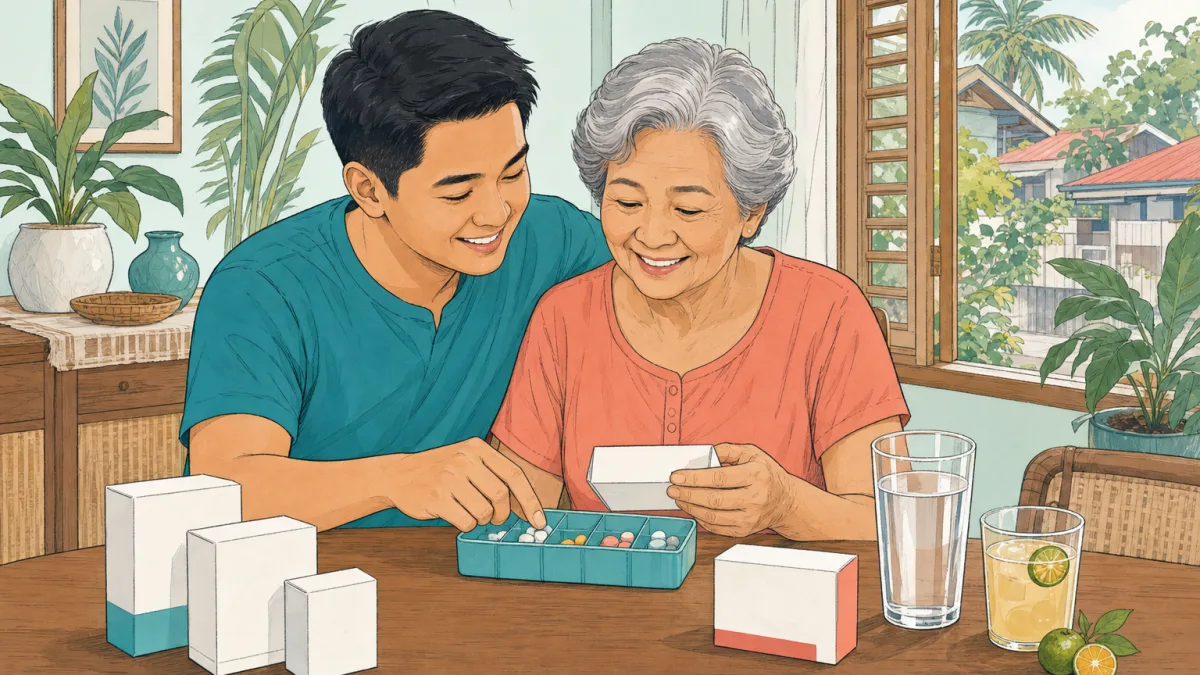
Key facts
- Ask for the active ingredient and strength, not just the brand you used at home.
- Most everyday medicine is sold over the counter at drugstores; some medicines need a prescription, and controlled medicines are restricted.
- The Generics Act of 1988 means doctors prescribe by active-ingredient name and pharmacists can offer you the generic version, so asking for the generic is normal and expected.
- Senior citizens are entitled to a 20 per cent discount and a VAT exemption on medicines under the Expanded Senior Citizens Act; carry your senior identification and ask at the counter.
- To bring your own supply in, keep medicines in their original packaging and carry a copy of your prescription or a doctor’s letter.
- Store medicines cool, dry and out of direct sun. The heat and humidity degrade tablets faster than a temperate climate.
- For an ongoing condition, use a doctor, clinic or hospital pharmacy rather than relying only on counter advice.
The brand you used at home may be absent from a Philippine shelf, even when a product with the same active ingredient is available. Bring the old pack when asking a pharmacist for a local match.
Can foreigners buy medicine in the Philippines?
Yes. Foreigners can buy medicine at Philippine drugstores the same way residents do. Many everyday medicines are available over the counter; some require a prescription, and controlled medicines are restricted and checked against the rules set by the Food and Drug Administration, the national authority that registers products and oversees safety.
Drugstores are common in the cities and towns, led by the dominant chain Mercury Drug along with Watsons, Generika, The Generics Pharmacy and many independents. A pharmacist can advise on everyday health needs and is the natural first stop for minor illnesses, and the bigger chains are reliably stocked, though stock and opening hours vary by location. The great practical advantage here is language: English is an official language and is used throughout healthcare and on packaging, so explaining what you need and reading a label is straightforward.
Why does the generics law matter?
The Generics Act of 1988 puts the generic name on prescriptions and labels. Under section 6, a prescriber may add a brand, but outlets must tell buyers about other products sharing the generic name and their prices. The law also requires manufacturers to make a generic version of the medicine they produce.
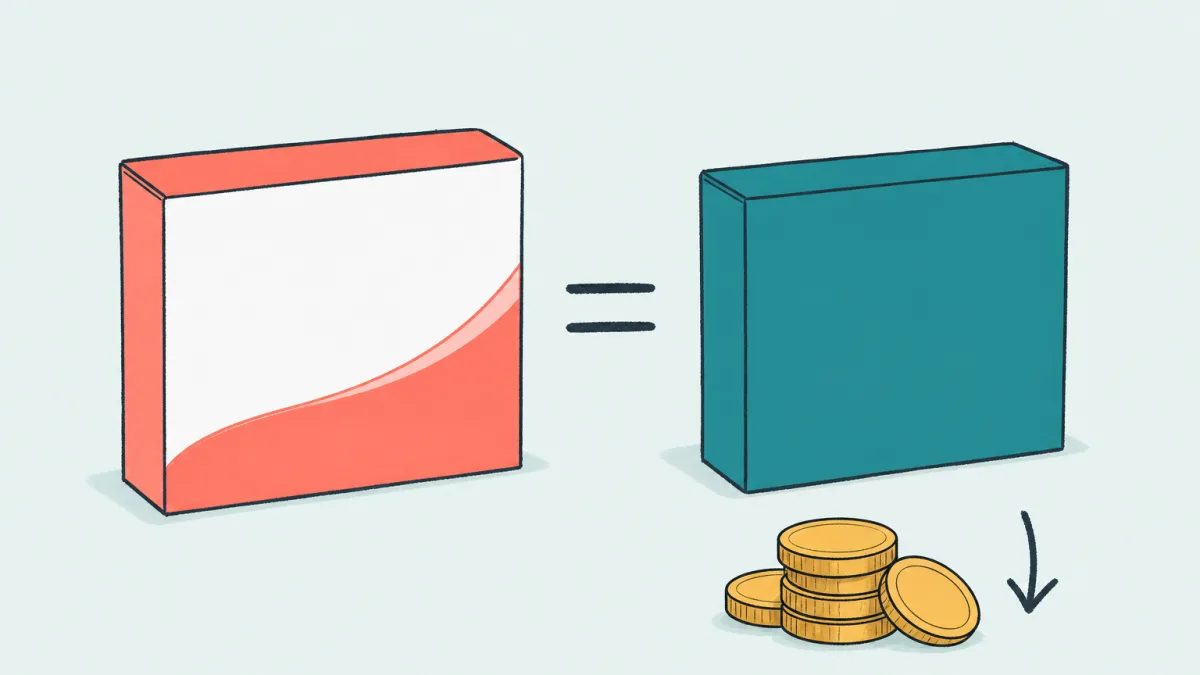
| The same medicine, two ways to buy it | |
|---|---|
| Originator brand | Higher price, familiar name |
| Generic (same active ingredient) | Lower price, same active ingredient |
What does medicine cost in the Philippines, and is there a senior discount?
Ask the drugstore to show products with the same generic name and their prices. The Generics Act requires this comparison. A generic is often cheaper than the originator brand, but compare the exact ingredient, strength and form before comparing the price tag.
There is also a benefit worth knowing if you are older or retired here. Under the Expanded Senior Citizens Act, senior citizens in the Philippines are entitled to a discount of 20 per cent, along with an exemption from VAT, on their medicines. The exact eligibility and process are set by the authorities and pharmacies apply it at the counter, so it is worth asking about and keeping your senior identification to hand. For many retirees, that discount on top of already-lower generic prices makes ongoing medicine markedly more affordable.
How do I find my medicine by active ingredient?
Read the active ingredient on the box, not the brand. Every medicine has one international name for its active ingredient and any number of brand names on top. The brand you relied on at home may not be sold in the Philippines, yet the same active ingredient almost certainly is, under a local name, and local doctors and pharmacists are used to working from it.
For amoxicillin or paracetamol, match the ingredient and strength on your prescription. The active ingredient pages group local names under the same molecule. Search by category or condition if you do not know the ingredient; the brand-name decoder covers foreign labels.
Can I bring prescription medicine into the Philippines?
Usually yes, for personal use, but keep the medicine in its original packaging and carry a prescription or doctor’s letter. Controlled medicines have stricter rules and may need documentation of medical need. Always check your exact medicine before you travel.
The UK Foreign Office makes the general point that the legal status and regulation of medicines can differ from your home country, so check before you travel. Keeping everything labelled and clearly yours, in your hand luggage, is the simplest way to avoid questions on arrival. A few sensible habits cover most situations:
- Keep medicines in their original, labelled packaging, not loose in a bag.
- Carry a copy of your prescription and a doctor’s letter listing the medicines, ideally with both the generic and brand names, the dose and the quantity.
- For anything stronger than an everyday medicine, particularly controlled substances, check the rules and carry documentation of medical need.
- Bring a sensible personal quantity rather than a bulk supply.
Because the details can change, the reliable approach is to confirm against an official source close to your travel date, and you can check whether a specific product is registered through the FDA Philippines. When in doubt about a particular medicine, confirm before you fly.
Regulatory note: FDA Philippines and import guidance for this article was last checked on 5 July 2026. Rules can change, especially for controlled and psychotropic medicines. Always verify the exact medicine against current FDA Philippines guidance before you travel.
What if my medicine is hard to find, or I run out?
A local clinic or hospital pharmacy can review a medicine that is hard to find. Bring the labelled pack and your prescription. Ask what local product matches the ingredient, strength and form; confirm prescription requirements before arranging a refill.
For a medicine you take every day, the priority is never running out. Many residents set up with a local doctor or clinic early, which gives a clear record of what they take and makes each refill simpler. From there you can buy locally, where generics are affordable, or order and have your medicine delivered, whichever is steadier where you live. Delivery is what makes continuity easy, especially if you are outside the big cities or want a specific generic kept in stock. Our guide to maintenance medicines in the Philippines goes into keeping a steady supply.
How should I store medicine in the heat and humidity?
Keep medicines cool, dry and out of direct sun, and leave tablets in their original blister until you take them. Heat and humidity break the active ingredient down faster, so a tablet that would keep to its printed expiry in a cool country can lose strength sooner here.
Read the product label for any special storage requirement. Keep tablets in the blister; do not use a steamy bathroom, kitchen shelf or hot car as routine storage. Ask a pharmacist about any tablet that has changed colour or texture.
Do and don’t
Do:
- Ask for the active ingredient and strength, not just a brand name.
- Ask for the generic version, which the system here is built to offer.
- Keep the box and leaflet, and check the batch number and expiry.
- Carry a prescription or doctor’s letter for regular and controlled medicines.
- Use a clinic or hospital pharmacy for ongoing conditions and anything that needs assessment.
- If you are a senior, carry your identification to claim the medicine discount.
- Bring enough of any regular medicine to cover settling in, plus a margin.
Don’t:
- Rely only on a foreign brand name the local drugstore may not stock.
- Buy loose tablets in unlabelled bags, or packs with smudged printing or no batch and expiry.
- Store medicines in the bathroom, the kitchen or a hot car.
- Travel with controlled or psychotropic medicines without checking the rules first.
- Self-prescribe antibiotics or controlled medicines to save a clinic visit.
- Leave refills until the last few tablets.
Where can I compare medicines before visiting a pharmacy?
Start with the active ingredient, strength and form on your pack or prescription. Browse active ingredients, categories or conditions. The ordering and delivery guide explains the online process where it is an option.
For more on pack and seller checks, see buying generic medicines in Asia and the WHO guide to substandard and falsified medicines.
Travelling elsewhere in the region? We have matching guides for Thailand, Singapore, Malaysia, Hong Kong and Bali.
This guide is general information, not medical or legal advice, and import rules can change. For anything that depends on your own medicine or your own situation, check the current FDA Philippines guidance or ask a qualified healthcare professional.
Useful links
- Food and Drug Administration (Philippines): home and product registration
- FDA Philippines: Generics Act of 1988 (Republic Act 6675)
- UK Foreign Office: Philippines travel advice, health and medication
- World Health Organization: substandard and falsified medical products