

Key facts
- Ask for the active ingredient and strength, not just the brand you used at home.
- A registered pharmacy displays the “Rx” logo and has a pharmacist on duty; a medicine store does not and cannot supply prescription medicine.
- Check a shop by name or address using the Drug Office Search Drug Dealers tool, and confirm a product on the drug database.
- For personal use, a reasonable quantity in your accompanied baggage may be exempt from import licensing; there is no single published number, so keep it sensible.
- Dangerous drugs (strong opioids, many benzodiazepines, some stimulants and sleeping medicines) need advance approval from the Department of Health and a Red Channel declaration to Customs. CBD and cannabis are dangerous drugs in any form.
- Keep medicines in their original labelled packaging and carry your prescription or a doctor’s letter.
- Store medicines cool, dry and out of direct sun. Hong Kong’s summer heat and humidity degrade tablets faster than a temperate climate.
A shop can sell cold remedies without being a registered pharmacy in Hong Kong. For prescription medicine, look for the Rx logo and check the retailer on the Drug Office list.
Can foreigners buy medicine in Hong Kong?
Yes. Foreigners buy medicine at Hong Kong pharmacies the same way residents do. Many everyday medicines are sold over the counter; prescription medicines must come from a registered pharmacy with a pharmacist present, and controlled medicines are restricted under Hong Kong law.
How do pharmacies work in Hong Kong, and what is the one sign worth knowing?
A registered pharmacy displays the “Rx” logo and has a pharmacist on duty; a medicine store does not, and only a registered pharmacy can supply prescription medicine.
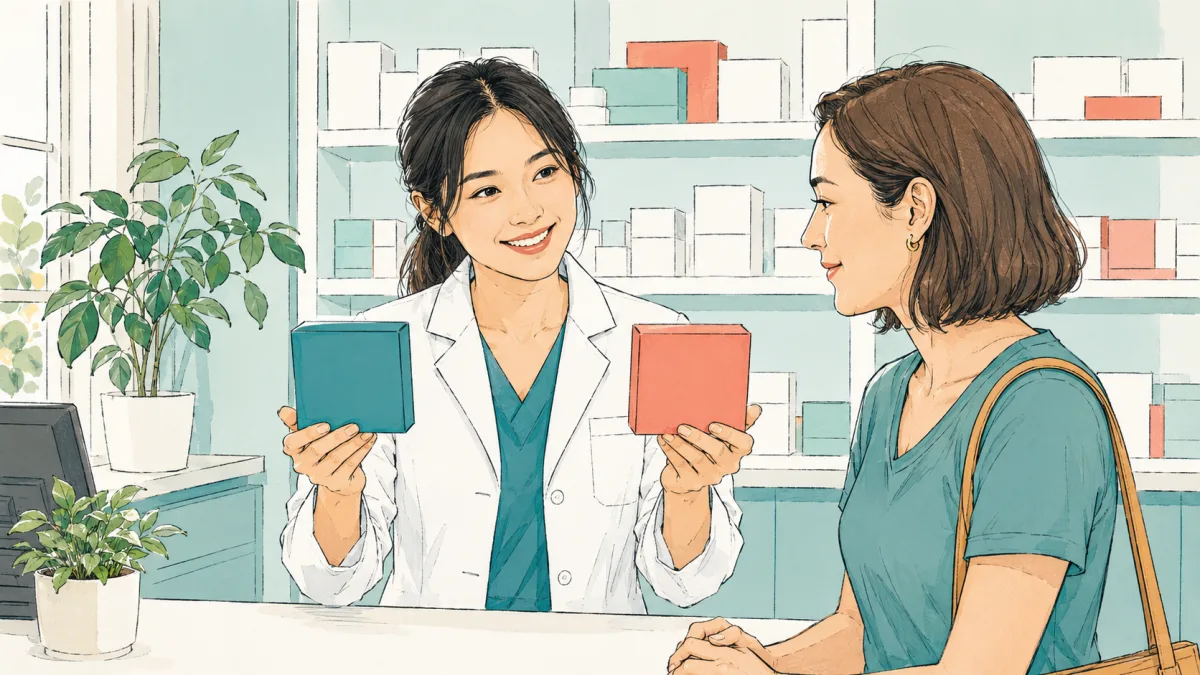
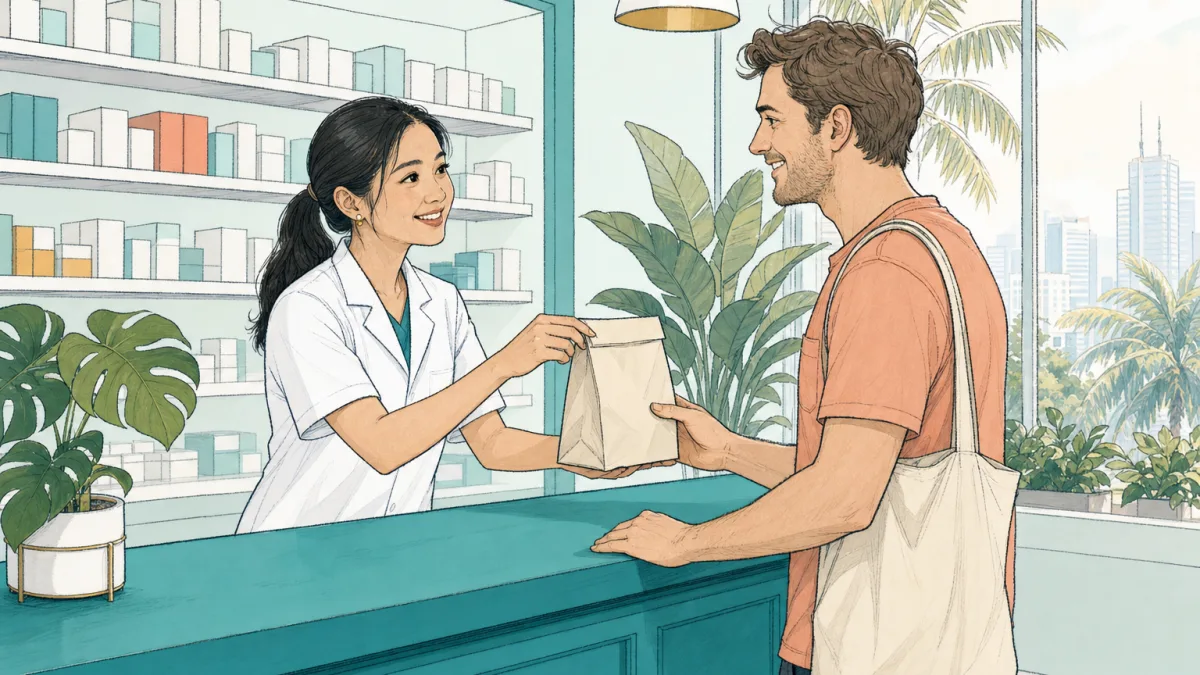
The familiar chains are common here. Watsons and Mannings have a presence in most districts, alongside independent shops and the pharmacies inside clinics and hospitals. The distinction to understand is easy to miss: in Hong Kong a registered pharmacy is not the same as a medicine store, and only one of them can supply prescription medicine.
A registered pharmacy, sometimes labelled a dispensary, holds an “Authorized Seller of Poisons” licence. It displays the “Rx” logo, has a pharmacist on duty, and can dispense prescription medicines under that pharmacist’s supervision. A medicine store, which may also call itself a medicine shop or medicine company, sells everyday lines such as cold and flu remedies but has no pharmacist on site, no “Rx” logo, and cannot hand over prescription medicine. Both are legitimate for what they are allowed to sell. You just want to know which one you are standing in.
This matters with the big chains too. Many Watsons and Mannings branches are ordinary health-and-beauty shops, while others are registered pharmacies with a pharmacist present. For everyday remedies either is fine; for anything more, look for the “Rx” logo. There is no language barrier to work around, as English is used throughout Hong Kong healthcare, so explaining what you need and following the advice is straightforward.
How do I tell a registered pharmacy from a medicine store?
Look for the “Rx” logo and a pharmacist on duty, and check the shop on the Drug Office Search Drug Dealers tool if you are unsure.
The signs are easy to read once you know them. A registered pharmacy displays the “Pharmacy” or “Dispensary” title and the “Rx” logo at the shopfront. Inside, the duty pharmacist’s certificate of registration and a notice of their attendance hours are shown somewhere visible, and the pharmacist must be present for at least two-thirds of opening hours. If you are unsure about a shop, you can check it by name or address using the Drug Office’s Search Drug Dealers tool.
It is worth the look, because the pharmacist is your best free resource. They are trained to recommend a suitable medicine for a minor problem and to explain how to take it properly, which is exactly the help you want when you are new to a place and its products.
Pharmacy, clinic or hospital: which should I use?
Use a registered pharmacy for minor, familiar needs. See a doctor at a clinic or hospital for a diagnosis, a prescription or ongoing care. For a repeat of a long-term medicine, a single early visit sets up a clear record that makes each refill simpler.
Hong Kong residents with an identity card get heavily subsidised public care through the Hospital Authority, while private GPs and hospitals are fast and convenient but can be expensive, especially if you are uninsured. The UK Foreign Office notes plainly that treatment for uninsured visitors is costly, which applies to unwary expats too. Cost and wait differ between these routes, so many expats use a private GP for convenience and carry good insurance to match. Note your nearest pharmacy, clinic and hospital when you arrive.
What does medicine cost in Hong Kong?
Prices vary by pharmacy type and by brand. Private healthcare and branded medicine in Hong Kong are not cheap, and a branded medicine at a private clinic can cost a good deal more than the same active ingredient bought as a generic. Ask for the active ingredient, the strength and the generic option before comparing prices, and for anything you take regularly that gap adds up over a year.
How do I find my medicine by active ingredient?
Read the active ingredient on the box, not the brand. The brand on your box at home may be sold under a different name here, but the active ingredient is universal. Paracetamol is paracetamol whatever the label says, and amoxicillin is amoxicillin under any brand.
So learn the active ingredient and strength of everything you take regularly. Our active ingredient pages group the brands that share a molecule, so you can recognise yours whatever the local packaging says, and you can browse by category or by condition to find what you need. In Hong Kong you can go a step further and confirm a product is properly registered by searching the Drug Office drug database by active ingredient. It also makes comparing prices far easier, because you are comparing like for like. If you are matching a home brand to its local equivalent, our medicine brand-name decoder walks through the same habit.
Can I bring prescription medicine into Hong Kong?
Usually yes, for personal use in a reasonable quantity, but keep each medicine in its original labelled packaging and carry your prescription or a doctor’s letter. Dangerous drugs need advance approval from the Department of Health and a Customs declaration. Always check your exact medicine before you travel.
Hong Kong is precise about importing medicines, so a little preparation goes a long way. The official position from Customs and the Drug Office is that medicines carried in your own accompanied baggage, for your personal use and in a reasonable quantity, may be exempted from the import-licensing requirement. There is no single published number for that quantity, so keep it sensible and matched to your trip, carry the original prescription or a doctor’s letter, and keep each medicine in its original labelled packaging.
Controlled medicines are the exception that needs real attention. Strong opioids, many benzodiazepines, certain stimulants such as methylphenidate and some sleeping medicines are dangerous drugs under Hong Kong law, and these need approval in advance from the Department of Health and a declaration to Customs through the Red Channel when you arrive. CBD and cannabis are classed as dangerous drugs here in any form, so do not bring them. Because the classification depends on the exact active ingredient, check your specific medicines before you travel rather than assuming, and contact the Drug Office if anything is unclear.
| Type of medicine | The rule | What to carry |
|---|---|---|
| Ordinary medicine, personal use | A reasonable quantity in your accompanied baggage may be exempt from import licensing | Original labelled packaging, plus your prescription or a doctor’s letter |
| Dangerous drugs (strong opioids, many benzodiazepines, some stimulants and sleeping medicines) | Need approval in advance from the Department of Health; declare to Customs at the Red Channel on arrival | Prior written approval, plus prescription or doctor’s letter |
| CBD and cannabis, any form | Classed as dangerous drugs; not allowed | Do not bring |
Regulatory note: Hong Kong Department of Health, Drug Office import guidance for this article was checked on 5 July 2026 and rechecked on 23 September 2026. Rules can change, especially for dangerous drugs such as strong opioids, benzodiazepines, stimulants and some sleeping medicines. Always verify your exact medicine against current Drug Office and Customs guidance before you travel.
How do I check that medicine is genuine?
Check the shop and the pack. Buy from a registered pharmacy showing the “Rx” logo, and verify both the shop and the product when it matters. You can check the shop on the Search Drug Dealers tool and the product in the drug database by its registration number or active ingredient.
How should I store medicine in Hong Kong’s heat and humidity?
Keep medicines cool, dry and out of direct sun, and leave tablets in their blister until you take them. Hong Kong summers are hot and very humid, which is hard on medicine, so a tablet that would keep to its printed expiry in a cool country can lose strength sooner here.
Air-conditioned rooms help, while the bathroom, where heat and steam collect, is the worst place. If a tablet looks discoloured, soft or crumbling, replace it, and buy sensible quantities rather than a large stockpile so nothing sits too long in the damp.
Do and don’t
Do:
- Ask for the active ingredient and strength, not just a brand name.
- Look for the “Rx” logo and a pharmacist on duty when you need prescription medicine.
- Check a shop on Search Drug Dealers and a product on the drug database when it matters.
- Keep medicines in their original labelled packaging, and carry a prescription or doctor’s letter.
- Check your specific medicines before you travel, and arrange Department of Health approval early for anything controlled.
- Bring a comfortable buffer of any regular medicine to cover settling in, plus a margin.
Don’t:
- Assume every Watsons or Mannings branch is a registered pharmacy; many are health-and-beauty shops.
- Buy from unverified grey-market sellers or sources you cannot check.
- Bring CBD, cannabis or any dangerous drug without checking the rules and getting approval first.
- Store medicines in the bathroom or anywhere hot and humid.
- Leave refills until the last few tablets.
Frequently asked questions
Can I use the public Hospital Authority system as an expat without a Hong Kong identity card? The heavily subsidised public rates apply to residents with a Hong Kong identity card. Without one, expect to pay non-eligible-person rates, which are much higher, so many expats without an HKID use a private GP and carry insurance to match.
How do I confirm a Hong Kong pharmacy or product is genuine before I buy? Check the shop by name or address on the Drug Office Search Drug Dealers tool, and the product on the drug database by its registration number or active ingredient. Buy from a registered pharmacy showing the “Rx” logo and check the pack is sealed with a clear batch number and expiry.
Where can I check a local product?
Search by active ingredient and confirm the product in the Drug Office database. Our ingredient, category and condition pages help identify local names; the brand-name decoder helps with an old brand. Read how ordering and delivery work if needed. The Singapore and Thailand guides cover neighbouring markets.
This guide is general information, not medical or legal advice. For your treatment, follow a doctor; for what you can bring into Hong Kong, follow the Drug Office and Customs.
Useful links
- ZoneMD: buying generic medicines in Asia
- Drug Office: the differences between a pharmacy and a medicine store
- Drug Office: search drug dealers, to check a pharmacy is registered
- Drug Office: search the drug database by active ingredient
- Drug Office: be cautious when buying medicines
- Hong Kong Customs and Excise: controlled imports
- UK Foreign Office: Hong Kong travel advice, health