

Key facts
- It is a muscle behaving badly, not a plumbing failure and not ageing. The bladder signals urgently when it is nowhere near full.
- Two drug families do the job differently. Antimuscarinics quieten the muscle; the beta-3 agonist relaxes it by another route with a different side-effect profile.
- Antimuscarinics reduce sweating, and the CDC lists medicines that interfere with the body’s heat regulation among those that raise heat risk (CDC).
- In a hot climate that is not a cosmetic side effect. Sweating is how you shed heat, and blunting it matters outdoors in April.
- Drinking less makes it worse, not better. Concentrated urine irritates the bladder further.
- There is an alternative family to ask about if the heat effect is a problem for you.
- Blood in the urine, pain or fever is not this. That needs assessment, not a bladder medicine.
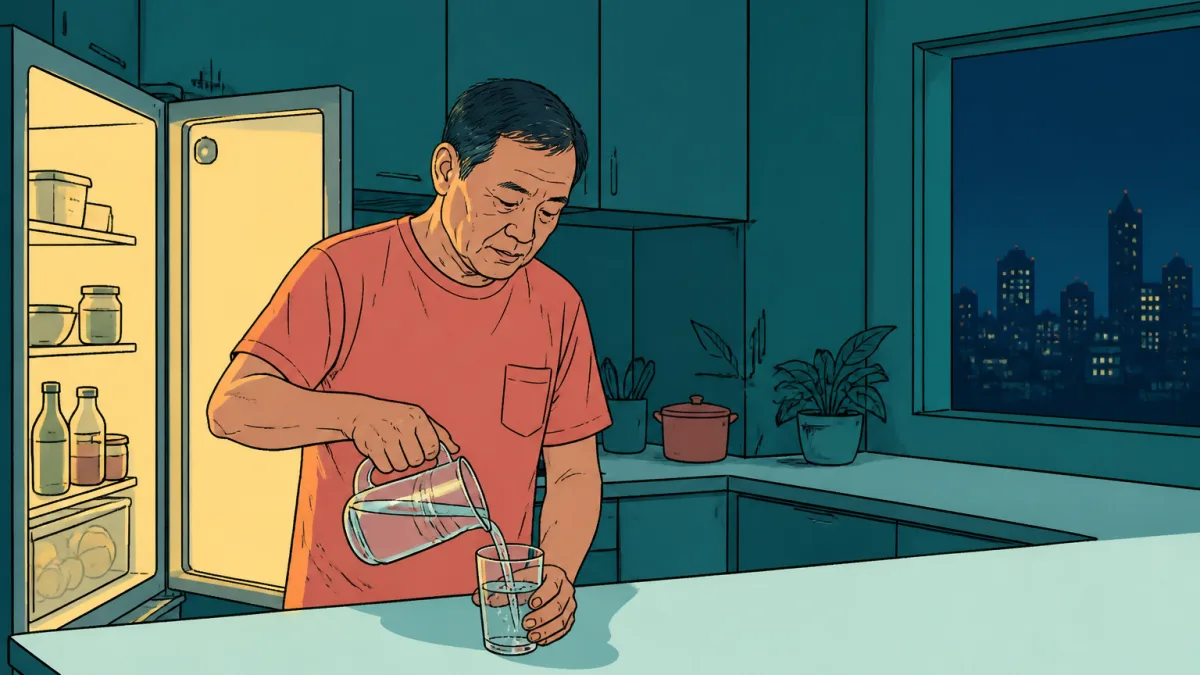
You have started mapping the city by its toilets. The mall with the good ones on level three, the coffee place that does not mind, the stretch of road where there is nothing for fifteen minutes and which you now plan around. You have quietly stopped taking the long bus. You sit near the aisle. You have not mentioned any of this to a doctor, because it is not exactly an illness, it is just how things are now.
That rearrangement happens, on average, for years before anyone brings it up in a consultation. Which is a shame, because it is treatable, and because the untreated version costs more than the treatment does.
What is actually happening?
An early urge can come from the bladder muscle contracting before the bladder is full. The bladder is a bag with a muscle wrapped round it. Normally that muscle stays quiet while the bag fills, then contracts when you decide.
In an overactive bladder it contracts, or tries to, when the bladder is nowhere near full. The result is not a small bladder or a weak one; it is a bladder that sends an urgent, hard-to-ignore message on the wrong schedule. SingHealth describes the urgency, frequency and night waking that follow.
Two things are worth saying plainly. It is not an inevitable part of getting older, though it becomes commoner with age. And it is not the same as stress incontinence, the leak that happens when you cough or laugh, which has different causes and different treatment. People conflate them constantly and end up trying the wrong solutions.
Which bladder medicines work differently?
Antimuscarinics and mirabegron take different routes to quiet urgency. Flavoxate is another option used more selectively.
| Family | On this site | What it does | The trade |
|---|---|---|---|
| Antimuscarinics | solifenacin, tolterodine, oxybutynin, darifenacin | Block the signal that tells the muscle to contract | Dry mouth, constipation, blurred vision, reduced sweating |
| Beta-3 agonist | mirabegron | Relaxes the muscle by a different pathway | Avoids most of the drying effects; can raise blood pressure |
| Antispasmodic | flavoxate | Older, milder, used more selectively | Generally less effective than the above |
Browse the shelf under bladder health or by condition under overactive bladder.
Desmopressin also appears in this category but does something quite different, reducing urine production overnight. It carries a real risk of dropping the body’s sodium, which is why it is closely supervised and not something to think of as an ordinary bladder tablet.
Why does the heat matter here?
Antimuscarinics work by blocking a signalling system that the body also uses to produce secretions. Saliva is one. Sweat is another.
In London that shows up as a dry mouth, which is annoying, and it is the side effect everyone gets warned about. Reduced sweating gets a passing mention as an oddity, because for most of the year it makes very little difference to anyone.
Here it makes a difference. Sweating is the main mechanism you have for shedding heat, and you are living somewhere that asks you to shed a great deal of it. A medicine that quietly turns that mechanism down is doing something with real consequences on a hot afternoon, on a walk between meetings, or on a weekend outdoors, and it stacks with everything described in our article on blood pressure medicine in a hot climate if you take something for that too.
This is not a reason to refuse the medicine. Enormous numbers of people take antimuscarinics in hot countries perfectly safely. It is a reason to know the effect exists, to be more careful than the person next to you about shade, fluids and pacing, and to notice if you feel unusually hot or unwell in heat rather than dismissing it.
And it is a reason to know that there is another family. Mirabegron works by a different route and does not carry the same drying effects. It has its own considerations, including an effect on blood pressure that matters if yours is already treated. Whether it suits you is a conversation, not a self-service switch, but it is a conversation worth having if the heat effect is real for you.
What other effects should I notice?
Dry mouth is common, and constipation, near-vision changes or confusion may matter too. Dry mouth is the commonest and the one that makes people stop. It is worth mentioning rather than enduring, because dose and choice of medicine both affect it, and because a permanently dry mouth is bad for teeth.
Constipation is common and often not connected to the tablet by the person experiencing it.
Reading vision can blur. If you have glaucoma, tell your eye doctor which bladder medicine you take; some types of glaucoma are a concern with antimuscarinics.
In older people there is an additional question about memory and confusion, because these medicines act on a system the brain uses too. It varies between the drugs in the family, some of which reach the brain far less than others, and it is a specific and reasonable thing to ask about rather than a reason for anyone to go without treatment.
What can help besides medicine?
Fluid timing, caffeine and bladder training deserve attention alongside medicines. Two habits do more than people expect, and one of them is usually being done backwards.
Drinking less does not help. It is the first thing almost everyone tries, and it makes things worse: less fluid means more concentrated urine, which irritates the bladder lining and increases urgency. In this climate it also risks dehydration on top. The useful adjustment is usually about when rather than how much, and that is worth working out with someone rather than guessing.
Caffeine is a bladder irritant, and the regional coffee culture is strong. It is worth an honest experiment before concluding that nothing helps. Changing evening fluids may help some people wake less at night; it will not treat every cause of night waking.
Bladder training and pelvic floor work have real evidence behind them and are not a lesser option offered instead of medicine; they work alongside it. What they are not is a reason to skip assessment.
And the exclusions matter. Blood in the urine, pain on passing it, fever, or a sudden change rather than a gradual one are not overactive bladder and should not be treated as it. Those need looking at.
What else should I read?
The wider heat and night-waking picture can change the plan. For the eye-medicine conversation, read our glaucoma-drops guide. For the heat interaction in full, see blood pressure medicine in a hot climate. For the other common cause of night waking in men, see enlarged prostate and the night you blame on the beer. For storage in this climate, see medicines that do not survive your kitchen.
FAQ
How long before I know if it is working?
These medicines are usually given a fair trial of some weeks rather than judged in days, and it is common to try more than one before finding the right fit. Stopping after a week because nothing has changed is the most frequent way people conclude that treatment does not work.
Will I need this forever?
Not necessarily. Bladder training, weight, caffeine and treating other contributing conditions all change the picture, and treatment is reviewed rather than assumed to be permanent.
I am a man and I have these symptoms. Is it the same thing?
Possibly, and possibly the prostate, and sometimes both at once. That distinction changes the treatment entirely, which is why it is worth being assessed rather than self-diagnosing from an article.
Do and don’t
Do:
- Tell the prescriber if you are struggling with heat or noticing less sweat.
- Ask whether a different medicine or bladder training could suit you.
- Have blood in urine, pain or fever assessed rather than treating it as ordinary urgency.
Don’t:
- Restrict fluids so much that urine becomes concentrated.
- Stop a prescribed medicine abruptly because of a hot day; discuss a plan first.
Sources
This article is general information, checked on 10 August 2026. It contains no doses and no schedules, and it is not a substitute for advice from a clinician who knows your history.