
Nocturia
Nocturia means waking from sleep one or more times to urinate. A single trip per night is common, especially with age, but waking two or more times regularly disrupts sleep and leaves people fatigued the next day. It is one of the most frequently reported urinary complaints, and late-evening fluid habits, high temperatures, and ageing populations can all contribute.

Key points
- Nocturnal polyuria, excess urine made overnight often from evening drinks or caffeine, is usually the main cause.
- An enlarged prostate is a common contributor in men from midlife onward, alongside an overactive or easily irritated bladder.
- Desmopressin can reduce overnight urine output in nocturnal polyuria by prompting the kidneys to retain more fluid.
What drives it
The causes vary and often overlap. Producing too much urine at night (nocturnal polyuria) is the most common trigger, linked to excess evening fluids, alcohol, or caffeine. An overactive or irritated bladder holds less and signals urgency more often. Enlarged prostate is a frequent cause in men from middle age onwards. Sleep disorders, heart conditions, diabetes, and certain medicines can all increase night-time urine output. Identifying which mechanism is at play shapes the right treatment.
Managing nocturia
Simple changes often reduce episodes significantly: shifting fluid intake earlier in the day, cutting caffeine and alcohol after early evening, and elevating the legs for an hour before bed to drain fluid that would otherwise reach the kidneys overnight. Where these steps fall short, bladder health treatments address the underlying cause directly. For cases driven by nocturnal polyuria, desmopressin reduces overnight urine production by signalling the kidneys to hold fluid.
Persistent nocturia that does not improve with lifestyle changes, or that appears alongside pain, blood in the urine, or significant urinary urgency, warrants a medical assessment to rule out an underlying condition.
Further reading
Related articles

23 Sept 2026 ⋅ 7 min read
Overactive Bladder in an Air-Conditioned Life
The medicines that calm an overactive bladder work partly by drying you out, and one of the things they dry is sweat. In a temperate country that is a nuisance. In this one it removes part of how you cope with the street outside.
Read guide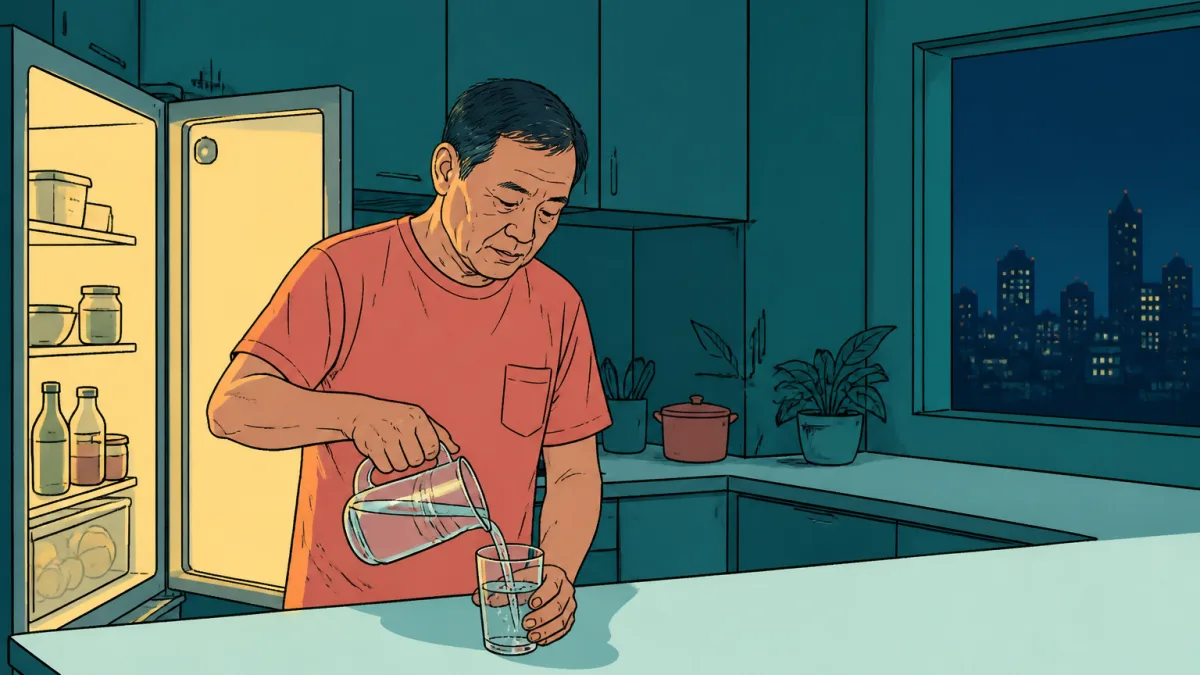
30 Jul 2026 ⋅ 8 min read
Enlarged Prostate and the Night You Blame on the Beer
Getting up twice a night has a plausible tropical explanation for about two years, which is roughly how long men take to mention it. What the two drug families actually do, and the blood-pressure interaction that matters enormously to this particular audience.
Read guide