
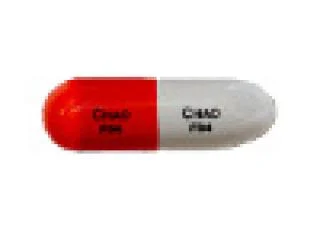
Seromycin
Cycloserine 250mg hard capsules, used in the management of tuberculosis. It mimics D-alanine, so the bacterial cell wall cannot be built.
- Category
- Antibiotics
- Active ingredient
- Cycloserine
- Route
- Oral use
- Form
- Capsule, hard
- Strengths
- 250mg
You will receive a quality generic equivalent, depending on stock.
Prescription rules on Seromycin vary by country.
Seromycin details
- Condition
- Tuberculosis
- Therapeutic class
- Antibiotic
- Pharmacological class
- Anti-tuberculosis agent
- Contraindications
- hypersensitivity to cycloserine; epilepsy; severe renal impairment
- Minor side effects
- headache; dizziness
- Moderate side effects
- tremor; confusion; vertigo
- Dosage forms
- Capsule, hard
- Administration route
- Oral use
- Supply category
- Pharmacist only, dispensed without a prescription
- Onset Time
- n/a
- Duration
- n/a
- Storage instructions
- Store in a tightly closed container.
- Drug interactions
- Alcohol; Ethionamide
Precautions and warnings
monitor for neurological and psychiatric effects; supplementation with vitamin B6 recommended
Serious side effects
seizures, requires immediate medical attention; psychosis, requires immediate medical attention
Patient summary
Cycloserine 250mg hard capsules, used in the management of tuberculosis. It mimics D-alanine, so the bacterial cell wall cannot be built.
Mechanism of action
Cycloserine inhibits bacterial cell wall synthesis by acting as an analogue of D-alanine.
Pregnancy and breastfeeding
Pregnancy: Use during pregnancy only if clearly needed. Breastfeeding: Confirm breastfeeding suitability with a qualified clinician or pharmacist before use.
What you will receive
Seromycin is the originator brand name, made by Mylan. We use it here to identify the medicine only; we are not affiliated with Mylan and do not ship the original Seromycin.
- You receive a generic equivalent: the same active ingredient (Cycloserine) at the same dose, mostly recognised Indian branded generics from vetted manufacturers.
- The exact brand supplied depends on what is in stock at the dispatching warehouse.
- A regulated generic matches the original ingredient for ingredient by legal standard.
Where this medicine is registered
- Singapore
- Hong Kong
- Thailand
- Malaysia
- Philippines
- Indonesia
- Taiwan
- South Korea
- Japan
- Australia
- New Zealand
- UAE
- South Africa
About Seromycin
Seromycin is a treatment containing cycloserine, used in the management of tuberculosis. It is provided as a capsule in the 250mg strength. This medication serves as a therapeutic option for patients requiring this specific active ingredient as part of an ongoing care plan.
Seromycin availability in Asia
Seromycin is registered across 14 markets including Japan, the UAE and Singapore, with availability also in Hong Kong, Thailand and Malaysia. Cycloserine is produced in international manufacturing hubs and serves as an option for patients in regions where access to established medicine can be inconsistent. The treatment is best used under the care of a physician who can monitor progress and individual health needs.