
Budesonide
Budesonide is a corticosteroid that targets inflammation directly in the airways and nasal passages. Originator brands such as Pulmicort helped establish it for asthma and COPD, while formulations like Rhinocort Aqua address allergic rhinitis and nasal polyps.
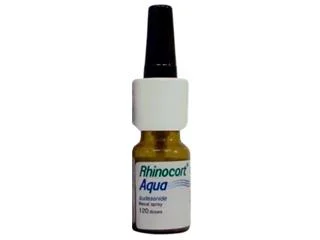
Rhinocort Nasal Spray
Allergic Rhinitis
64mcg
Rhinocort Nasal Spray is budesonide at 64mcg per spray for allergic rhinitis, a glucocorticoid with strong local action and little beyond it.
Key points
- Acts mainly locally in the lungs or nose rather than circulating throughout the body, which keeps its systemic exposure comparatively low.
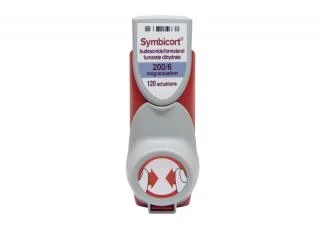
- One brand, Symbicort, pairs it with a long-acting bronchodilator so a single inhaler delivers both anti-inflammatory and airway-opening effects.
- Inhaled forms treat asthma and COPD while nasal sprays and solutions ease allergic rhinitis, and it can also shrink nasal polyps.
What is Budesonide?
Budesonide is a synthetic corticosteroid medication designed to reduce swelling and irritation right where it causes symptoms, in the lining of your lungs or nasal passages. Unlike steroids that circulate widely through your body, budesonide acts mostly locally, which keeps systemic exposure low.
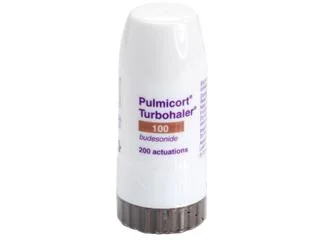
Several brands and delivery devices exist because the same molecule serves different clinical needs. Pulmicort targets the lower airways through a nebuliser or dry-powder device, while Rhinocort Aqua delivers the drug as a fine mist into the nose. Symbicort pairs budesonide with a long-acting bronchodilator for combined maintenance therapy.
What Budesonide is used for
Budesonide is prescribed across a range of inflammatory airway and nasal conditions. In the lungs, it is used for ongoing management of Asthma and as a maintenance option for Chronic Obstructive Pulmonary Disease. In the nose, it addresses Allergic Rhinitis symptoms such as sneezing, congestion and runny nose, and it can also shrink Nasal Polyps to improve breathing.
The choice between a lung-directed form and a nasal form depends on where your inflammation is most active. Some patients use both, an inhaler for the lower airways and a nasal spray for upper-airway symptoms, under the guidance of their doctor.
How does Budesonide work?
Budesonide binds to glucocorticoid receptors inside cells lining your airways and nasal passages. Once attached, it switches off the genes that drive inflammation, reducing the production of cytokines, mucus and the swelling that narrows your airways.
For you, this means less wheezing, fewer asthma flare-ups, easier nasal breathing and reduced reliance on quick-relief medications. The effect builds over days of consistent use rather than providing instant relief.
Budesonide brands and forms
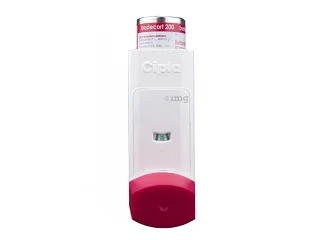
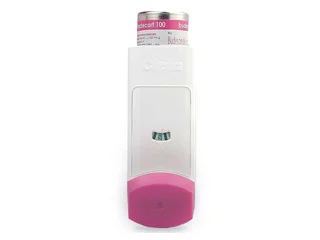
The budesonide picture splits into two broad categories: inhaled forms for the lungs and nasal forms for the upper airways. Inhalation powder devices such as Easyhaler Budesonide and Budelin Novolizer deliver a measured dose deep into the lungs, while nebuliser suspensions like Pulmicort are used with a mesh or jet nebuliser for patients who struggle with handheld devices.
Nasal spray and solution formulations, including Rhinocort and Rhinocort Aqua, coat the nasal lining to calm allergy-driven inflammation. Symbicort combines budesonide with formoterol, adding bronchodilation to anti-inflammatory control. Within Respiratory Health and Allergy Relief, the right form depends on your diagnosis, device preference and how you respond to treatment.
Safety overview for Budesonide
What to check before using this medicine
Before starting budesonide, let your doctor know about any recent infections, especially tuberculosis, fungal infections or chickenpox exposure. Inform them if you are pregnant, breastfeeding or planning surgery, as these factors may influence the choice of device or dose.
Possible reactions and tolerability
Local side effects are the most common. Inhaled budesonide can cause throat irritation, coughing or hoarseness, while nasal forms may produce dryness, sneezing or an unpleasant taste. Rinsing your mouth and gargling after each inhaled dose significantly lowers the risk of oral thrush.
Interactions and health factors
Budesonide can interact with other medications that affect the same metabolic pathways, including certain antifungal and antiviral drugs. If you take other inhaled or nasal medicines, confirm the combination with your prescriber to avoid overlapping doses.
Product labelling and verified clinical sources remain the correct references for specific contraindications, interactions and reactions.
Further reading
Related articles

10 Aug 2026 ⋅ 9 min read
Asthma and COPD in the Haze Season: Why Your Reliever Runs Out in March
The burning season turns controlled asthma into uncontrolled asthma every year, and most people respond to it with the wrong inhaler. What the smoke does to an airway, why reaching for the blue one more often is a signal rather than a solution, and how to plan for a season you can see coming.
Read guide