
Brinzolamide
Brinzolamide is a carbonic anhydrase inhibitor used to lower elevated eye pressure in people with glaucoma or ocular hypertension. It works by reducing the amount of fluid produced inside the eye.
Key points
- Applied directly to the eye rather than swallowed, it avoids the whole-body effects linked to oral carbonic anhydrase inhibitors.
- As a suspension rather than a solution, it clings to the eye’s surface longer, which helps keep the pressure-lowering effect steady through the day.
- It is often added when a single eye drop has not brought pressure down enough, sometimes alongside a prostaglandin analogue or a beta blocker.
What is Brinzolamide?
Brinzolamide is a topical carbonic anhydrase inhibitor formulated specifically for ophthalmic use. Rather than being taken by mouth, it is applied directly to the eye as a suspension, allowing it to act locally on the ciliary body where aqueous humour is produced. This targeted approach lowers intraocular pressure without the systemic effects associated with oral carbonic anhydrase inhibitors.
The suspension formulation is designed to improve corneal contact time and drug bioavailability within the eye. This means the medicine stays in contact with ocular tissues longer, which can support consistent pressure-lowering effects throughout the day.
What Brinzolamide is used for
Brinzolamide is used to manage elevated intraocular pressure in patients with open-angle glaucoma or ocular hypertension. Elevated eye pressure is a key risk factor in the progression of Glaucoma, and reducing it is central to preserving vision over time. It is also prescribed for Ocular Hypertension, a condition where eye pressure is higher than normal but optic nerve damage has not yet developed.
In many clinical settings, brinzolamide is used as an add-on therapy when a single agent has not achieved the target eye pressure. It may be combined with other topical agents to reach the desired pressure reduction.
How does Brinzolamide work?
Brinzolamide inhibits carbonic anhydrase, an enzyme found in the ciliary processes of the eye. This enzyme plays a role in producing aqueous humour, the clear fluid that fills the front part of the eye. By slowing this production, brinzolamide reduces the amount of fluid inside the eye, which in turn lowers the pressure.
For you, this means less strain on the optic nerve and a reduced risk of gradual vision loss associated with prolonged elevated eye pressure. The effect is local to the eye, so systemic exposure and whole-body side effects are minimal compared to oral formulations of similar drug classes.
Brinzolamide brands and forms
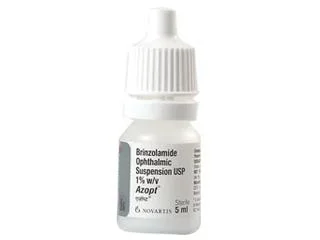
The primary branded formulation available is Azopt, supplied as an ophthalmic suspension. The suspension form is a liquid with fine particles that need to be shaken before use to ensure even distribution of the active ingredient. This form is well suited for patients who prefer a drop-based regimen over gel or ointment alternatives.
Within the broader Eye Care category, brinzolamide occupies a specific role as a second-line or adjunctive agent for intraocular pressure management. Patients comparing options will find it listed alongside other topical agents such as prostaglandin analogues and beta blockers.
Safety overview for Brinzolamide
What to check before using this medicine
Before starting brinzolamide, let your eye care provider know if you have a known allergy to sulfonamides, as cross-reactivity is possible. Inform them about any other eye medications you are currently using, as timing between applications may need to be adjusted.
Possible reactions and tolerability
Some users report temporary blurring of vision immediately after applying the drops, along with mild eye discomfort, stinging, or a bitter taste in the mouth. These effects are generally short-lived. Persistent redness, swelling, or changes in vision should be reported to your provider.
Interactions and health factors
If you are taking oral carbonic anhydrase inhibitors, using brinzolamide at the same time may increase the likelihood of systemic side effects. Contact lens wearers should remove lenses before application and wait before reinserting them, as preservatives in the suspension may be absorbed by soft lenses.
Product labelling and verified clinical sources remain the correct references for specific contraindications, interactions and reactions.
Further reading
Related articles

4 Aug 2026 ⋅ 8 min read
Glaucoma Drops: The Diagnosis You Cannot Feel
Glaucoma gives you nothing to go on. No pain, no blurring, and no sign at all that you stopped treating it. Why the sight it takes does not come back, what each family of drops is doing, and the visible side effects that quietly end treatment.
Read guide