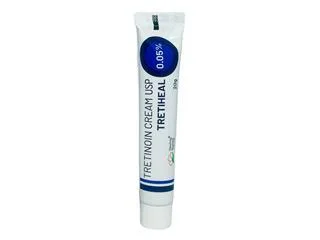
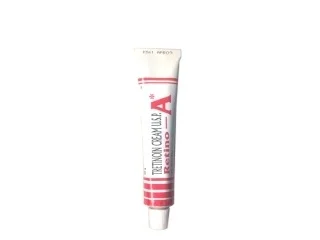
Retin-a Cream
0.025 · 0.05%
Tretinoin cream at 0.025% and 0.05%, applied for acne vulgaris and photoageing. It normalises keratinisation so microcomedones do not form.
From$12.35/ tubeView
Photoageing is the skin damage that accumulates from years of ultraviolet exposure rather than from the natural ageing process. It accounts for most visible changes people associate with older-looking skin: deep wrinkles, uneven pigmentation, rough texture, and reduced elasticity. In tropical and subtropical regions, year-round high UV intensity means cumulative UV load builds faster than in temperate climates, making photoageing a practical concern well before middle age.
0.025 · 0.05%
Tretinoin cream at 0.025% and 0.05%, applied for acne vulgaris and photoageing. It normalises keratinisation so microcomedones do not form.
UV radiation breaks down collagen and elastin in the dermis, the structural proteins that keep skin firm and smooth. At the same time, melanocytes respond to repeated UV injury by producing irregular clusters of pigment, creating the flat brown spots (solar lentigines) typical of photoaged skin. The outer layer thickens and roughens, pores appear enlarged, and fine blood vessels may become visible. These changes are distinct from intrinsic ageing and can begin appearing in a person’s thirties, or earlier with heavy, unprotected sun exposure.
The most evidence-backed topical treatment for photoageing is tretinoin, a vitamin A derivative that accelerates cell turnover, stimulates new collagen production, and gradually fades pigmentation. It is used nightly, starting at a low concentration to allow the skin to adapt, and improvement in fine lines and tone typically becomes visible after several months of consistent use. Retinoid therapy sits within the broader skin care category of treatments at ZoneMD.