
Mydriasis
Mydriasis refers to dilation of the pupil beyond its normal size. In clinical practice, it is almost always induced deliberately so that an ophthalmologist or optometrist can examine the retina, optic nerve, and lens clearly. The pupil can also dilate as a drug side effect, after head trauma, or due to certain neurological conditions.

Key points
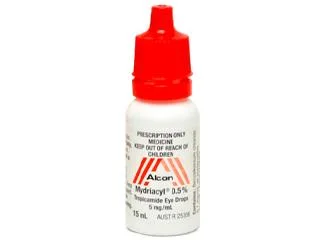
- Eye drops such as cyclopentolate or tropicamide are used deliberately to widen the pupil so a clinician can inspect the retina.
- Cyclopentolate lasts several hours and also relaxes the eye’s focusing muscle, while tropicamide wears off sooner for briefer dilation.
- Sudden one-sided pupil widening without any drops used, especially alongside headache or a drooping eyelid, needs prompt medical assessment.
What triggers pupil dilation and how it is managed
Clinically induced mydriasis relies on short-acting anticholinergic or adrenergic eye drops. Two agents commonly used in eye-care clinics are cyclopentolate and tropicamide. Cyclopentolate acts for several hours and is preferred when the examiner also needs to paralyse the focusing muscle (cycloplegia). Tropicamide has a shorter duration and is often chosen when only brief dilation is needed.
During dilation, bright light becomes uncomfortable and near vision blurs temporarily. Both effects resolve as the drops wear off. Driving or operating machinery while dilated is inadvisable. If one pupil suddenly dilates without any drops being used, particularly alongside headache, double vision, or drooping of the eyelid, prompt medical review is warranted.