
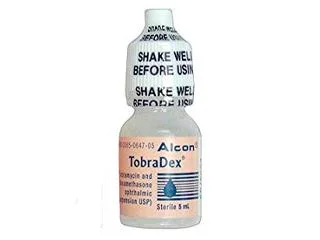
Tobramycin and Dexamethasone Eye Drops
0.1/0.3%
Tobramycin with dexamethasone 0.1/0.3% eye drops for bacterial ocular infection and ocular inflammation, an antibiotic and a steroid in one bottle.
From$7.82/ tubeView
A bacterial ocular infection is an infection of the eye or its surrounding tissues caused by bacteria. The most common form is bacterial conjunctivitis, though bacteria can also infect the cornea (keratitis) or eyelid margins (blepharitis). In tropical and subtropical climates, warm and humid conditions can make bacterial eye infections more frequent, particularly in environments with limited access to clean water.
0.1/0.3%
Tobramycin with dexamethasone 0.1/0.3% eye drops for bacterial ocular infection and ocular inflammation, an antibiotic and a steroid in one bottle.
Symptoms typically include redness, a gritty or burning sensation, sticky yellow or green discharge, and crusting around the eyelids after sleep. One or both eyes may be affected. Unlike viral conjunctivitis, bacterial infections often produce thicker discharge and the eye may feel more stuck shut in the morning.
Seek prompt attention if vision becomes blurred, pain is severe, or the eye is very sensitive to light, these may indicate a deeper infection such as corneal involvement, which needs faster treatment.
Antibiotic eye drops or ointments are the standard approach. Agents such as tobramycin target a broad range of common bacteria. When significant inflammation accompanies the infection, a combined preparation containing both an antibiotic and a corticosteroid like dexamethasone may be used to manage both the infection and the swelling. Browse the full range in eye care.