
Genital Warts
Genital warts are soft, flesh-coloured growths that develop on the skin and mucous membranes of the genitals, anus, or surrounding area. They are caused by certain low-risk strains of human papillomavirus (HPV), most commonly types 6 and 11. HPV is one of the most common sexually transmitted infections worldwide, including in highly urbanised settings.
Key points
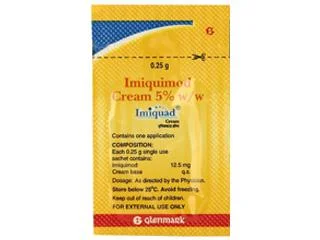
- One common topical treatment prompts the immune system to break down affected wart tissue over several weeks of use.
- Larger clusters of warts, or ones in awkward spots, are sometimes physically removed using cold or surgical methods instead.
- Recurrence remains possible after treatment since the virus itself is not necessarily cleared from the surrounding skin.
How genital warts are cleared
Warts do not clear on their own for everyone, but treatment can remove visible growths. The most widely used topical approach is imiquimod, a cream that stimulates the body’s own immune response to destroy wart tissue. It is applied directly to the affected area over several weeks. For skin care involving HPV-related growths, consistent and correct application is key to getting results.
If warts are large, numerous, or in sensitive locations, a clinician can offer physical removal procedures such as cryotherapy or surgical excision. Even after treatment, warts can recur because the underlying virus may persist in the skin. Condom use reduces, though does not eliminate, transmission risk.
See a doctor promptly if warts spread rapidly, bleed, or appear inside the vagina, urethra, or rectum.